Clearing the air

Durham County is in the middle of a heat wave on the final day of Emma Llewelyn’s summer practicum with the local public health department.
She’s worked there since early June, completing a requirement for her Master of Public Health (MPH) program at the Gillings School of Global Public Health. Today is August 13, and she’s capping her experience with a presentation to the Durham County Board of Health before classes start back next week.
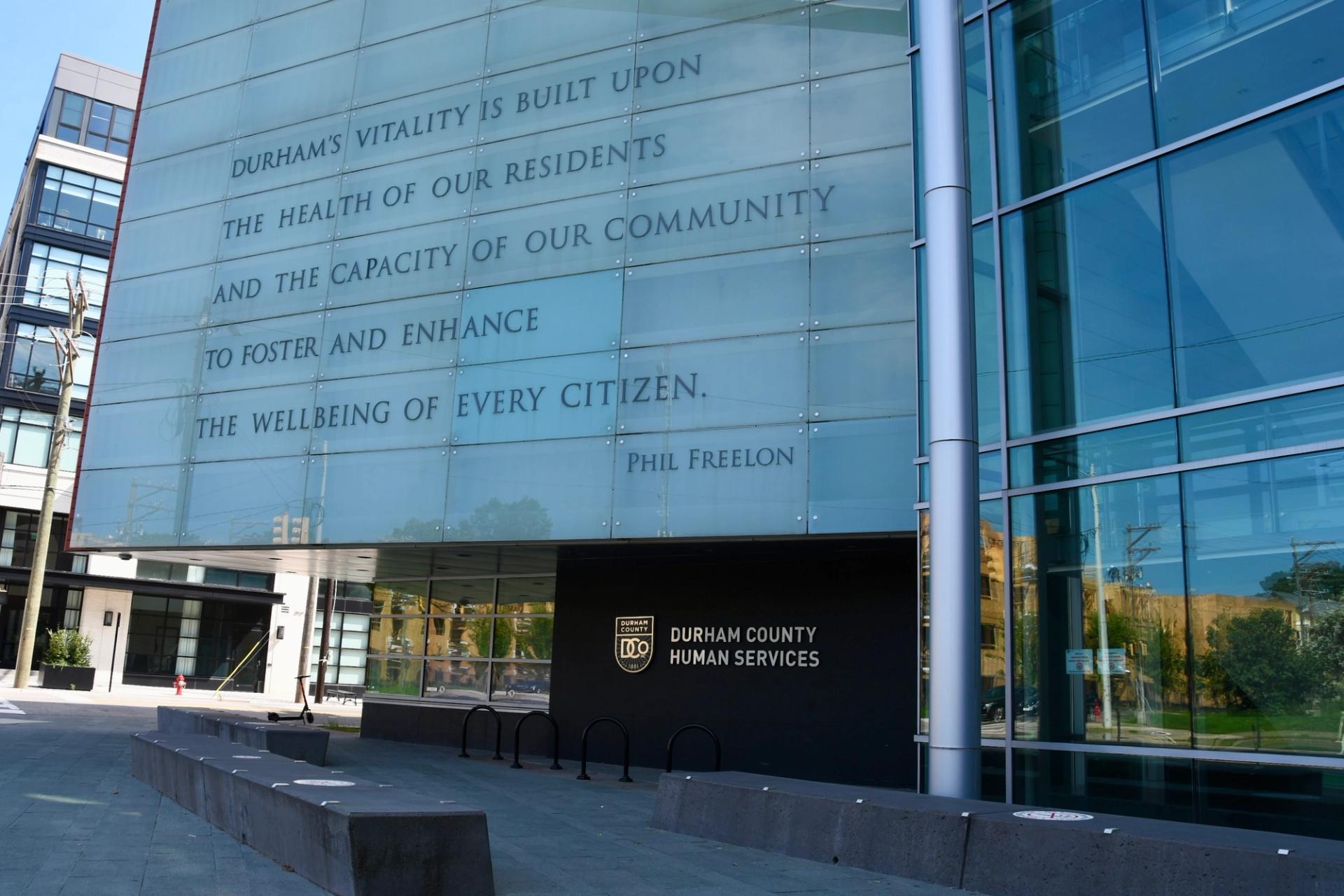
The Main Street entrance of the public health department showcases foot-tall metal words: “Durham’s vitality is built upon the health of our residents and the capacity of our community to foster and enhance the well-being of every citizen.”
That quote is from renowned architect, Phil Freelon, and its spirit is manifested in the building’s public spaces, which include a play area for children. Reaching Emma’s summer headquarters, however, requires a swipe of her badge and a walk through the seemingly endless rows of cubicles that make up the beating heart of the county’s public health apparatus.
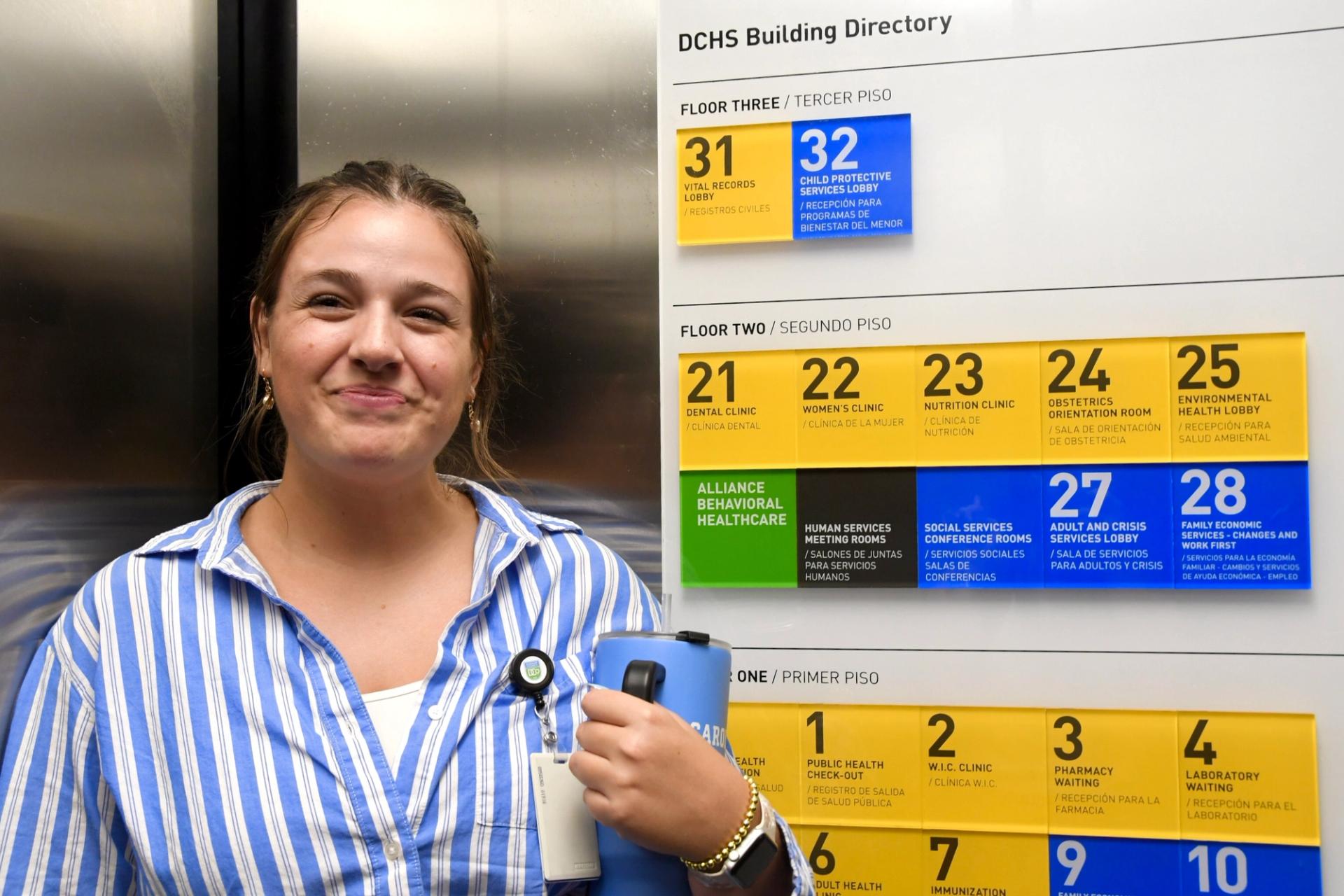
“I never thought I’d work in a local health department,” she confides while striding through the halls to the sounds of keyboards clacking. “Before starting my MPH, I worked at the federal level at a lobbying firm focused on Medicare reimbursement policy. I really enjoyed interviewing with the Durham County team, but I felt sure their work would be simpler somehow. Instead, I’ve found that the local level is even more complex and offers the policy wonk in me endless opportunities to get into the weeds.”
Emma describes the three main deliverables of her practicum: a policy memo for the local Board of Health, a related Successful Passage Plan to be enacted if the memo is approved and an (unrelated) Tobacco Free Schools implementation toolkit to be shared with Durham County public schools.
She says a typical day finds her working on her computer next to fellow intern and Gillings Student Neha Vaddepally.

The two of them meet every Monday with their practicum preceptor, Jasmine Sturdivant, MPH, who is the regional tobacco prevention manager for the county. They check in about progress and share feedback, which sometimes stems from meetings with a network of community partners.
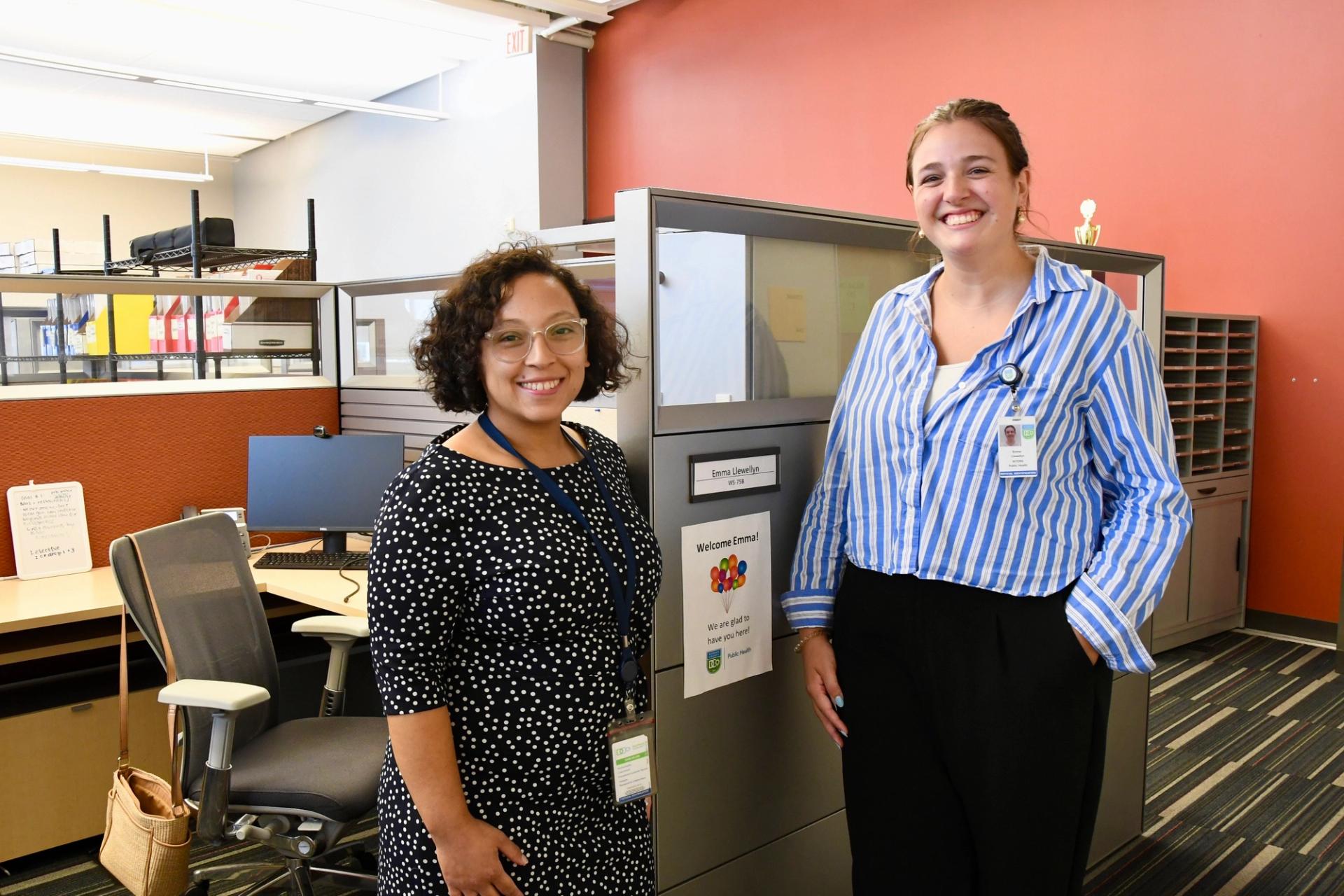
“It’s been really exciting to do community-engaged work,” Emma shares. “The policy memo I drafted centers on the county wanting to update the existing smoking rule. Durham has had a rule on the books since 2012, but a lot has changed since then with the rise of e-cigarettes, plus we have more evidence about the dangers of second-hand smoke. The state has its own tobacco policy, but at the local level, we’re aiming to be even more comprehensive in our approach.”
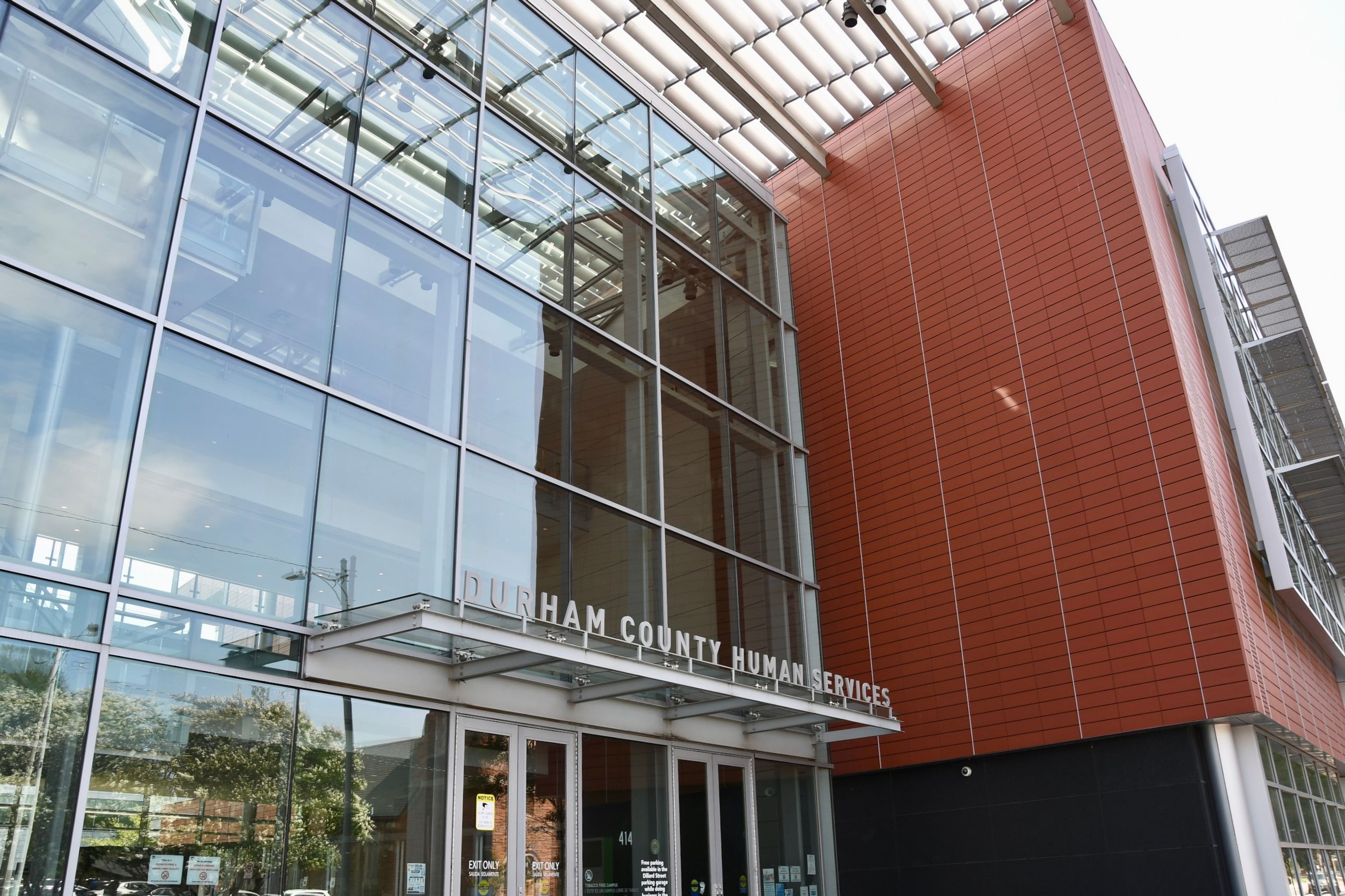
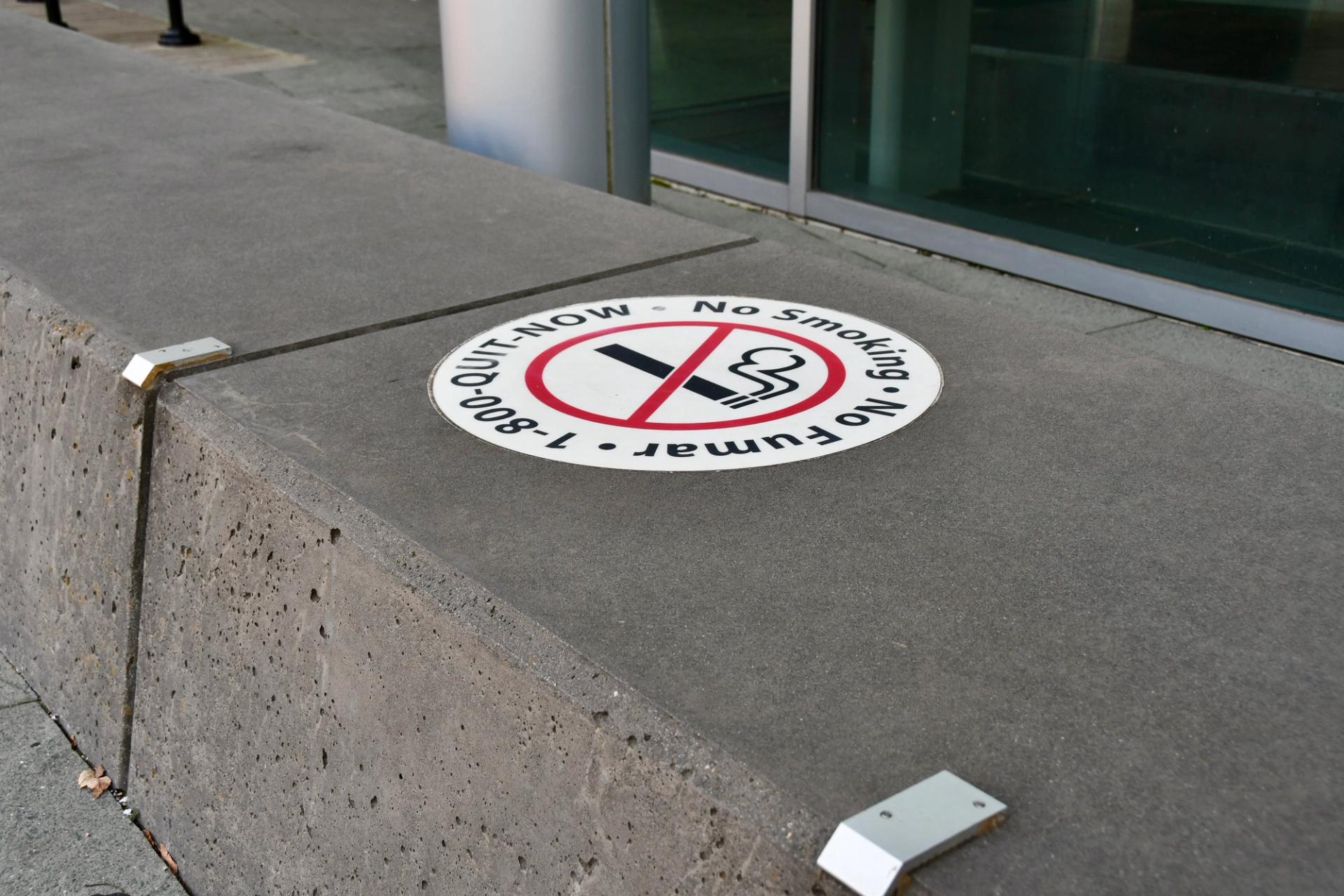
Currently, there’s almost no way to enforce the county smoking rule. The list of places where smoking is prohibited is oddly piecemeal, creating a risk for loopholes. What’s more, an infraction — in other words, smoking where it’s prohibited — incurs a $50 civil fine, but there is literally no mechanism to collect that money.
“Instead of ineffectively fining people $50, we’d prefer to get at the root cause of tobacco use, which is addiction,” Emma says. “In the Health Education Division, we’re aiming to enroll violators in tobacco education classes, and offer cessation support if they’re ready for it. If the Board of Health approves the policy memo we’re presenting tonight, that process will move forward to the county legal team so we can work out the exact details of how it would be enforced.”

Emma and Jasmine’s joint presentation contains perspectives from members of the Smoking Rules Review Committee, which Emma wrote into the Successful Passage Plan. Consisting of experts from across the public health department and individuals with valuable insights who were recruited through community partners, the group met for the first time at the end of July.
While organizing information packets for Board of Health members in advance of the presentation, Emma reflects on how her summer practicum tied back to her first year of classes at the Gillings School, where she studies in the Health Policy concentration.
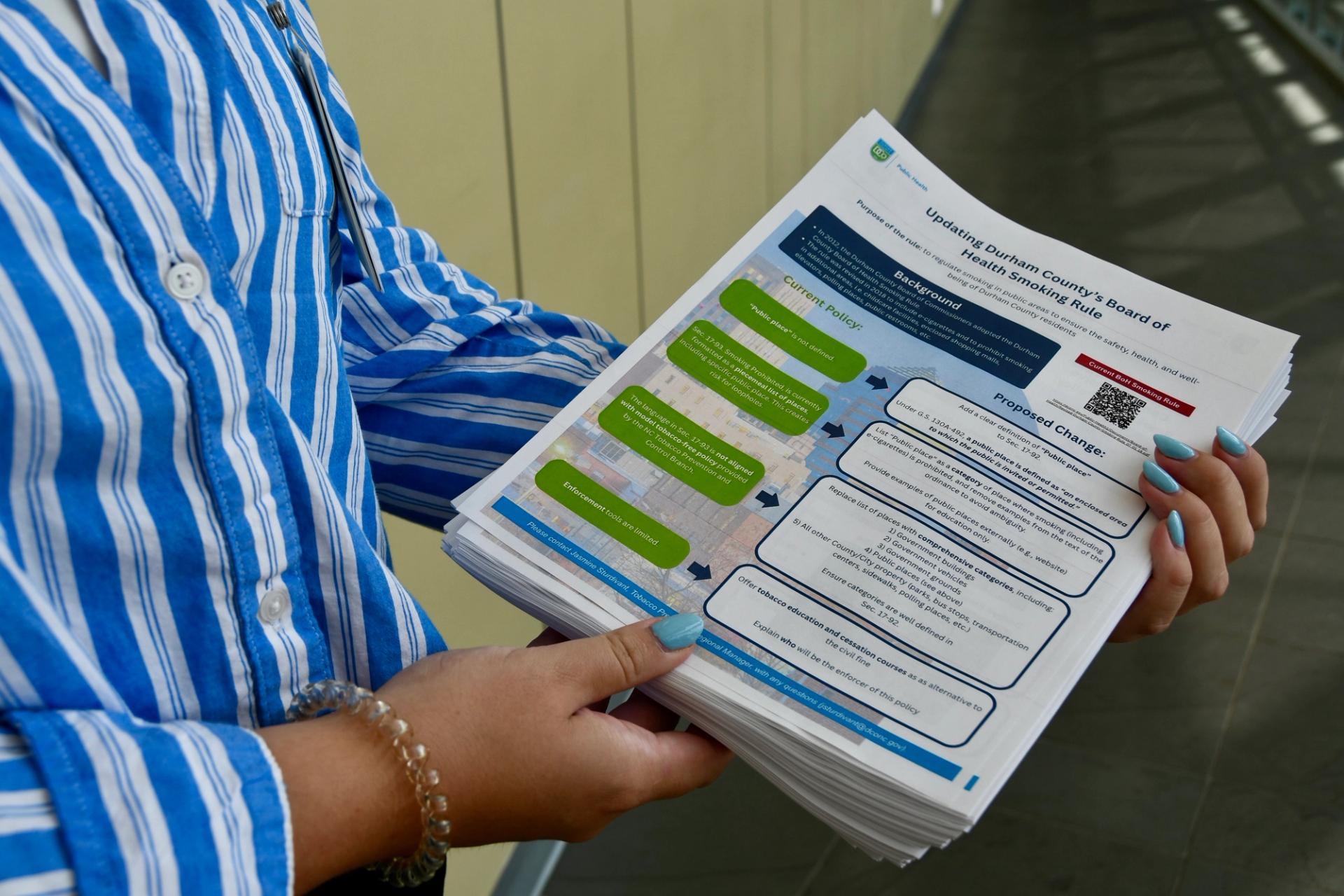
“Gillings prepared me so well in terms of interdisciplinary work,” she says. “In this role, I’m sitting with HIV care coordinators, folks working in local schools, all sorts of public servants under the health education umbrella — and I was fully ready to recognize the value in that variety of viewpoints because of how my master’s program frames collaboration.”
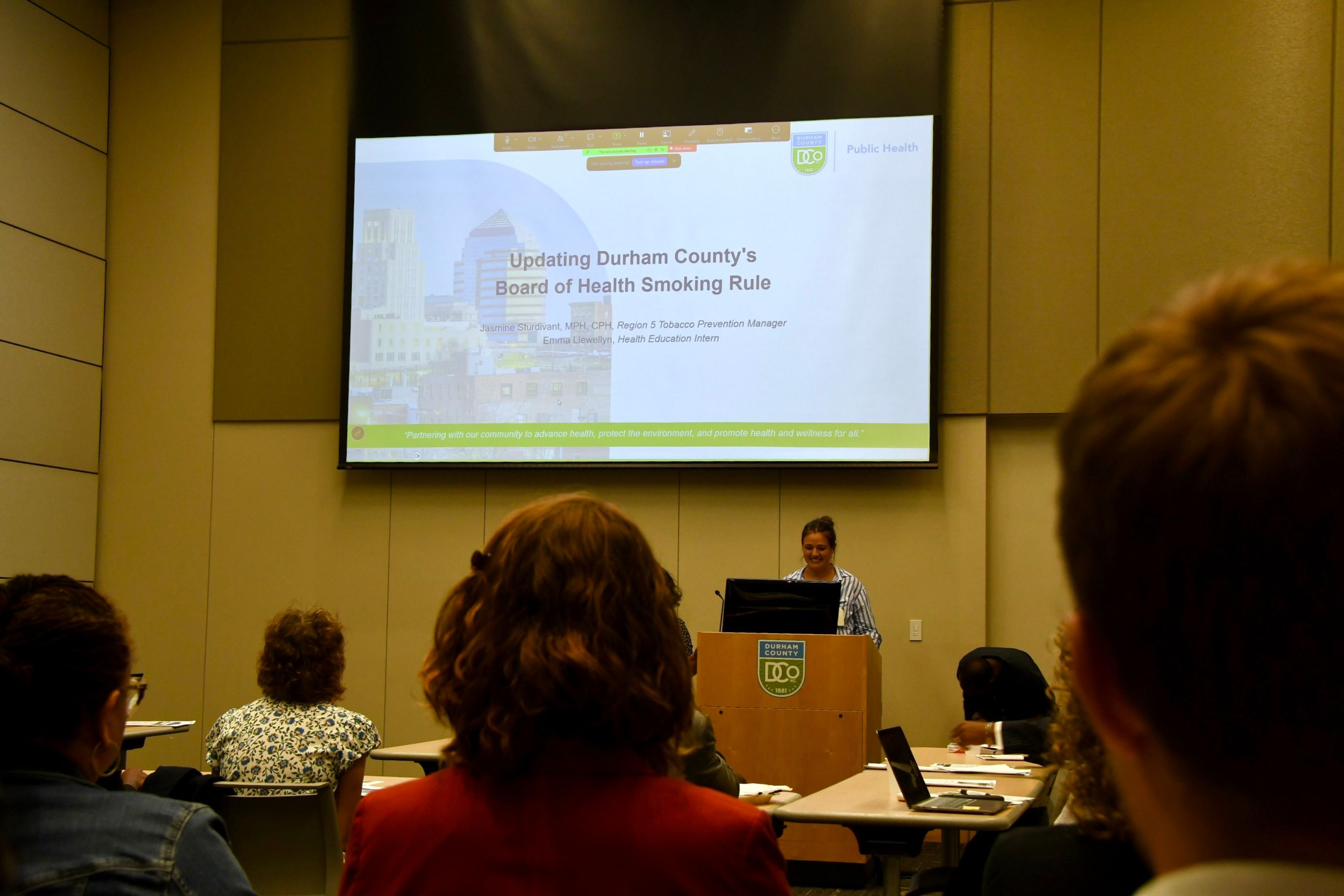
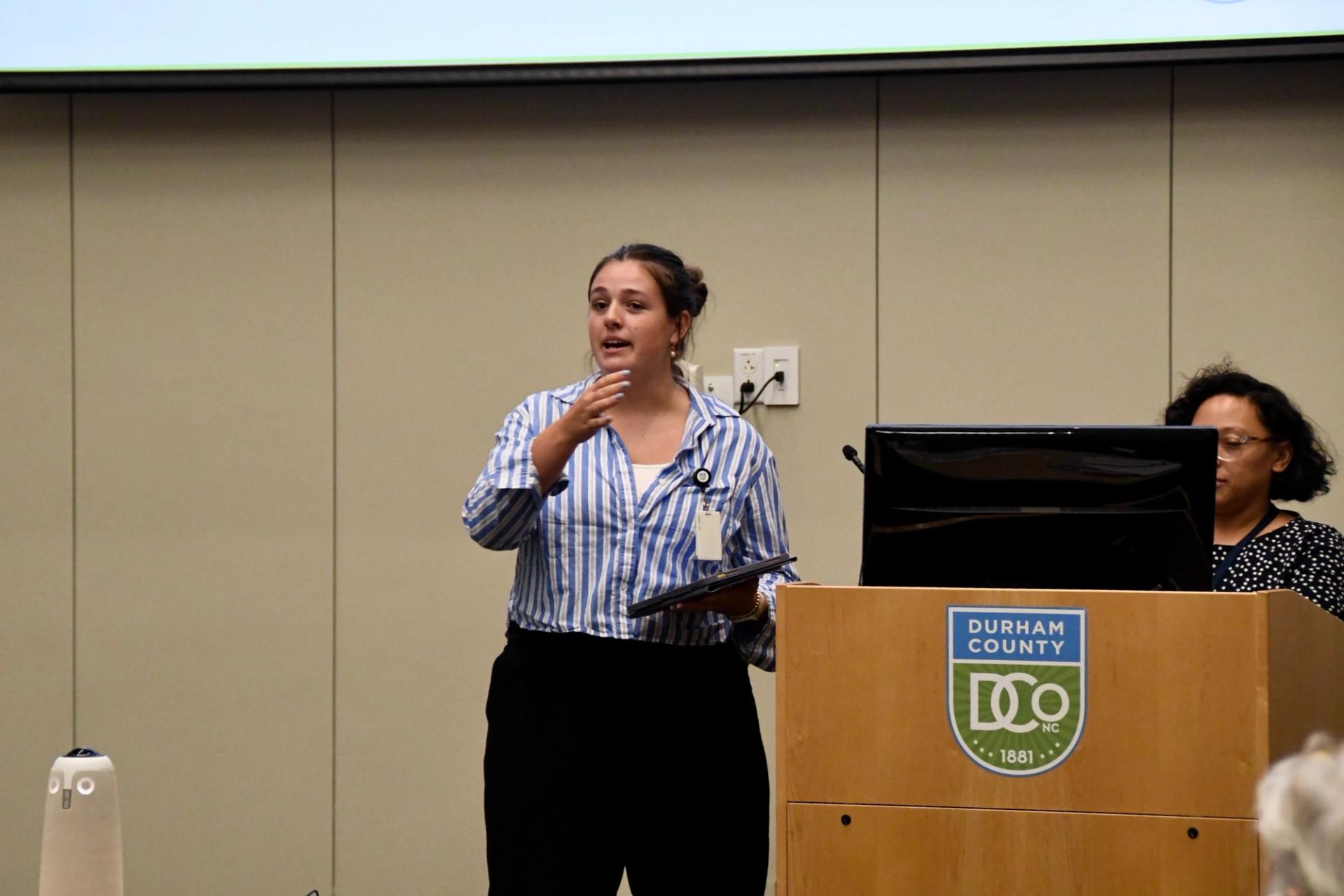
In a high-ceilinged conference room where four presentations are on the agenda, Emma and Jasmine go third. They guide the Board of Health members through their compelling case for an updated smoking rule.
“It’s great work. Very much needed,” one board member says.
Conversation ensues around the details of how to define an “enclosed area” and the need to consider mental health support for teens who use vaping for anxiety relief.
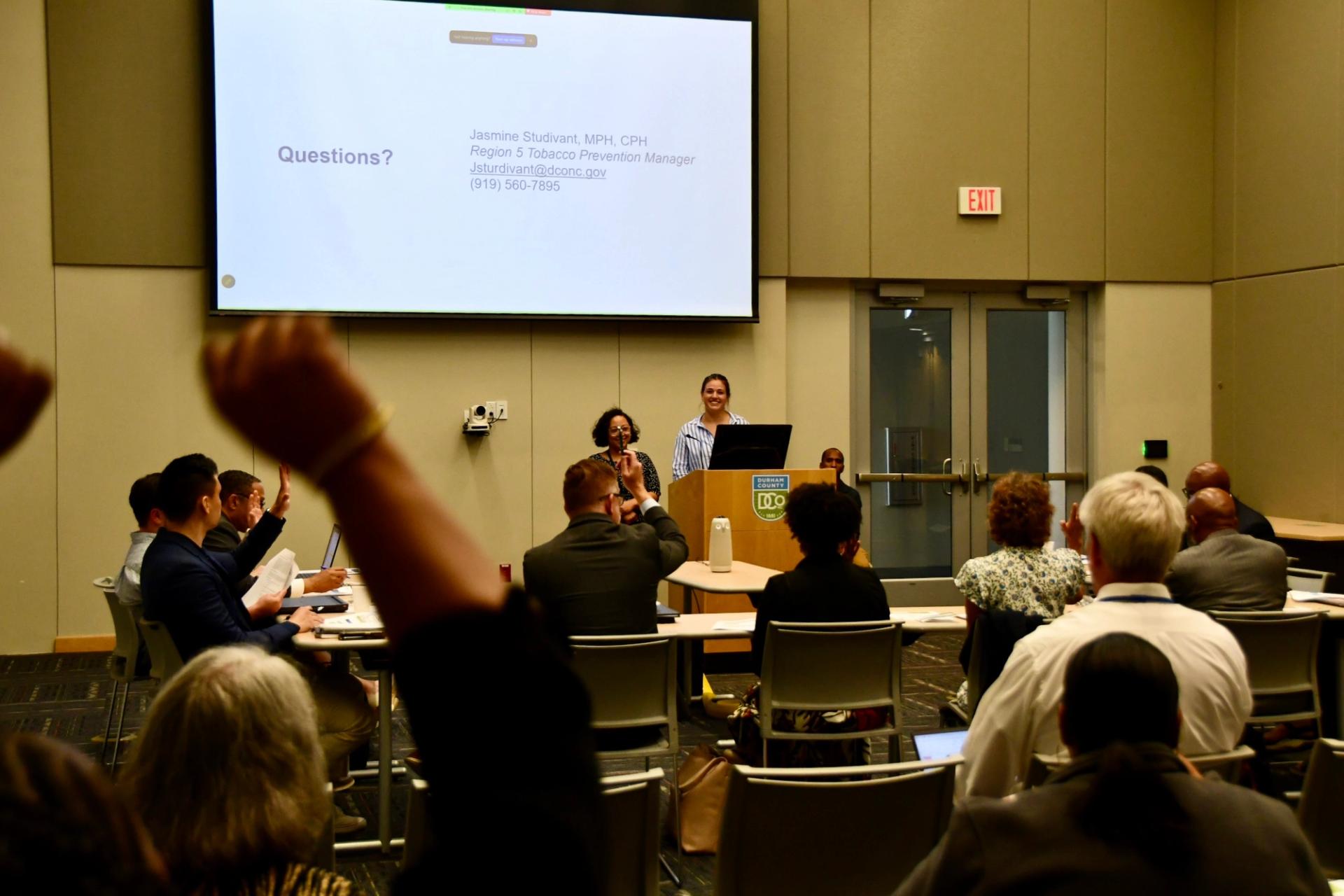
Then, another board member says, “I love this so much! I’d vote for it right now if I could.”
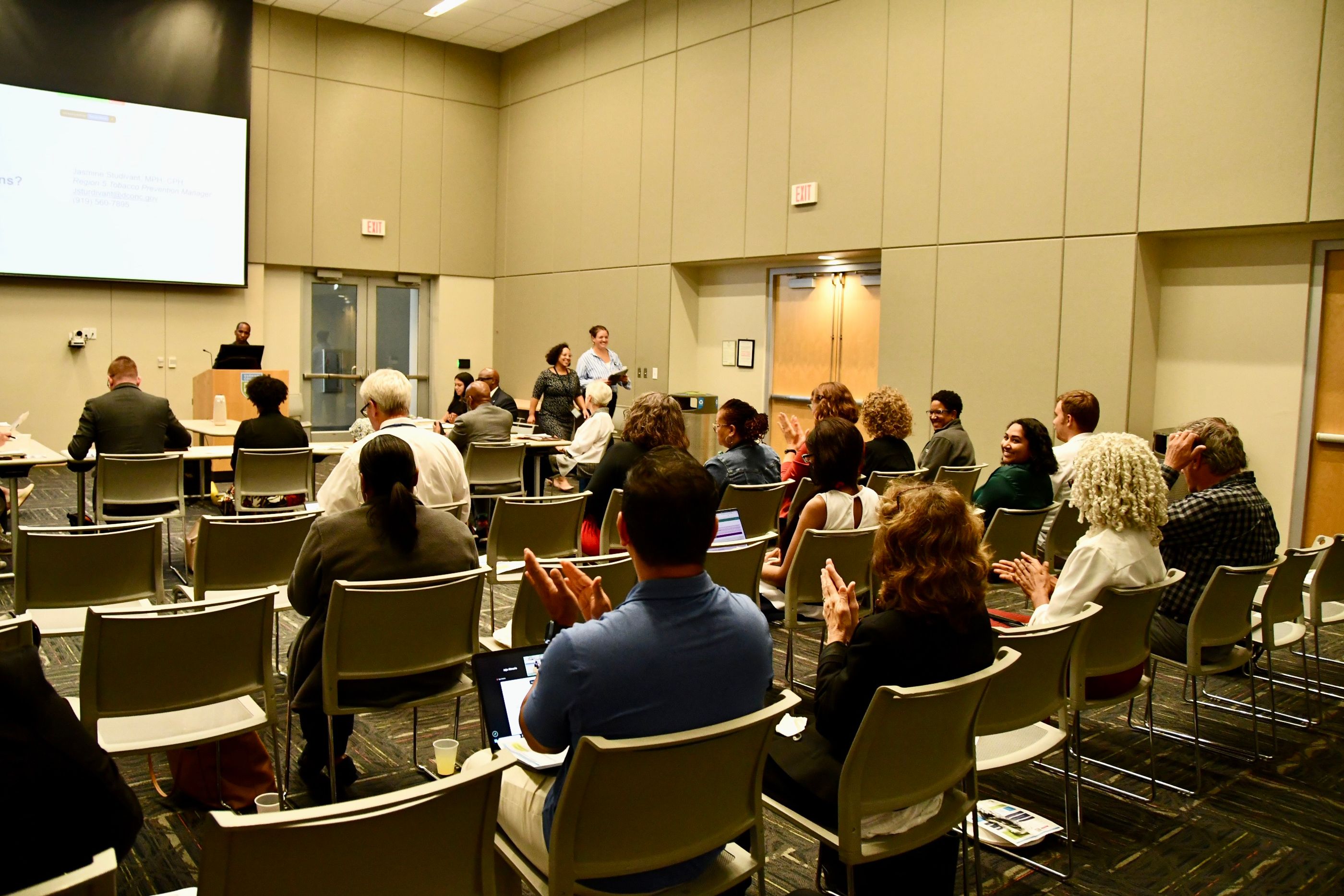
Happily, that is possible. The motion is raised, seconded and unanimously approved, while Emma and Jasmine beam from the podium.
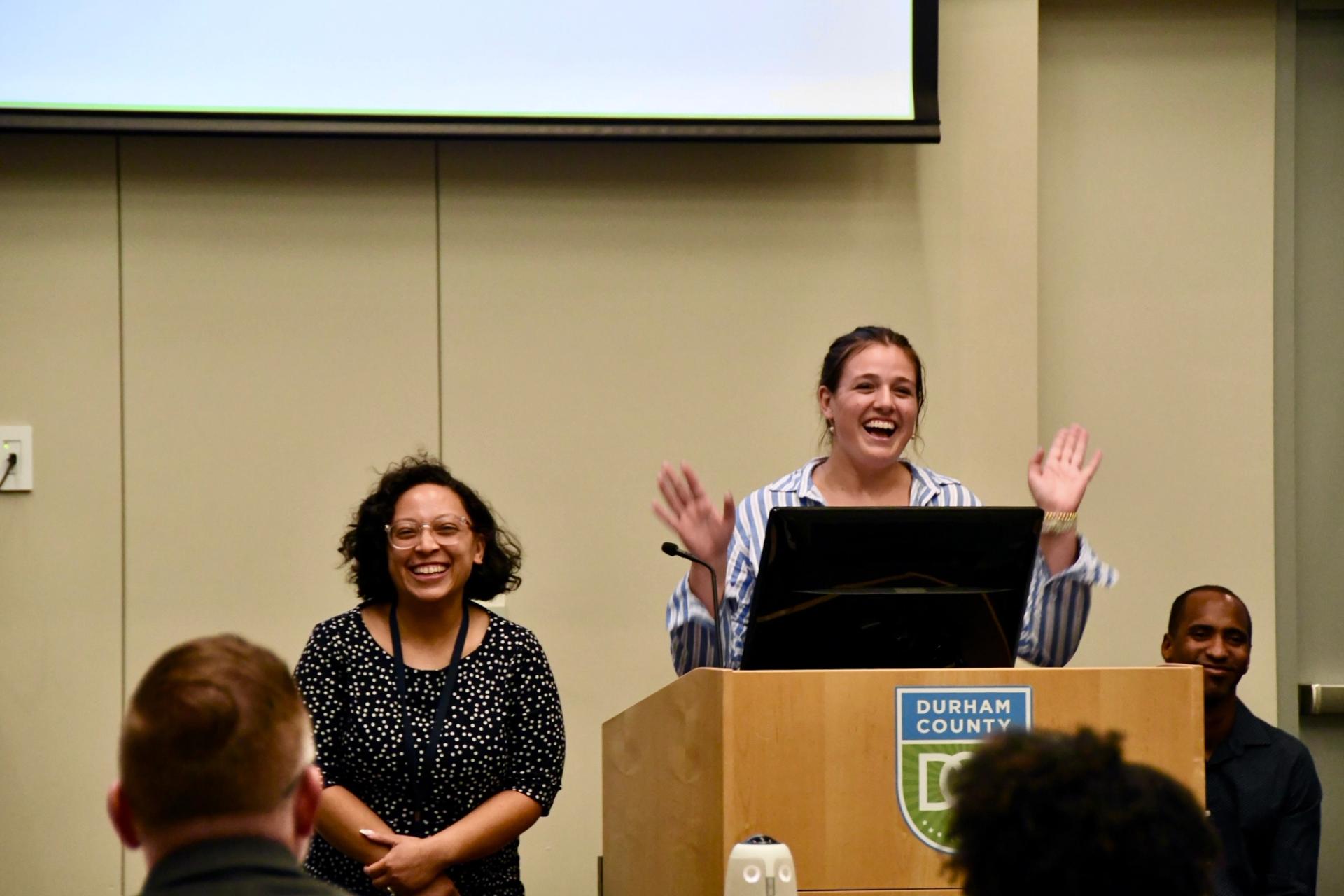
Earlier in the day, Emma had shared news that the Department of Public Health offered her a six-month extension to her role. They were hoping she’d get the chance to implement the ideas in her Successful Passage Plan.
Now, her road forward has a green light.
———
Have an idea for another story that would work well as a photo essay? Contact us to give us a heads up at sphcomm@unc.edu.
