Growing for community resilience
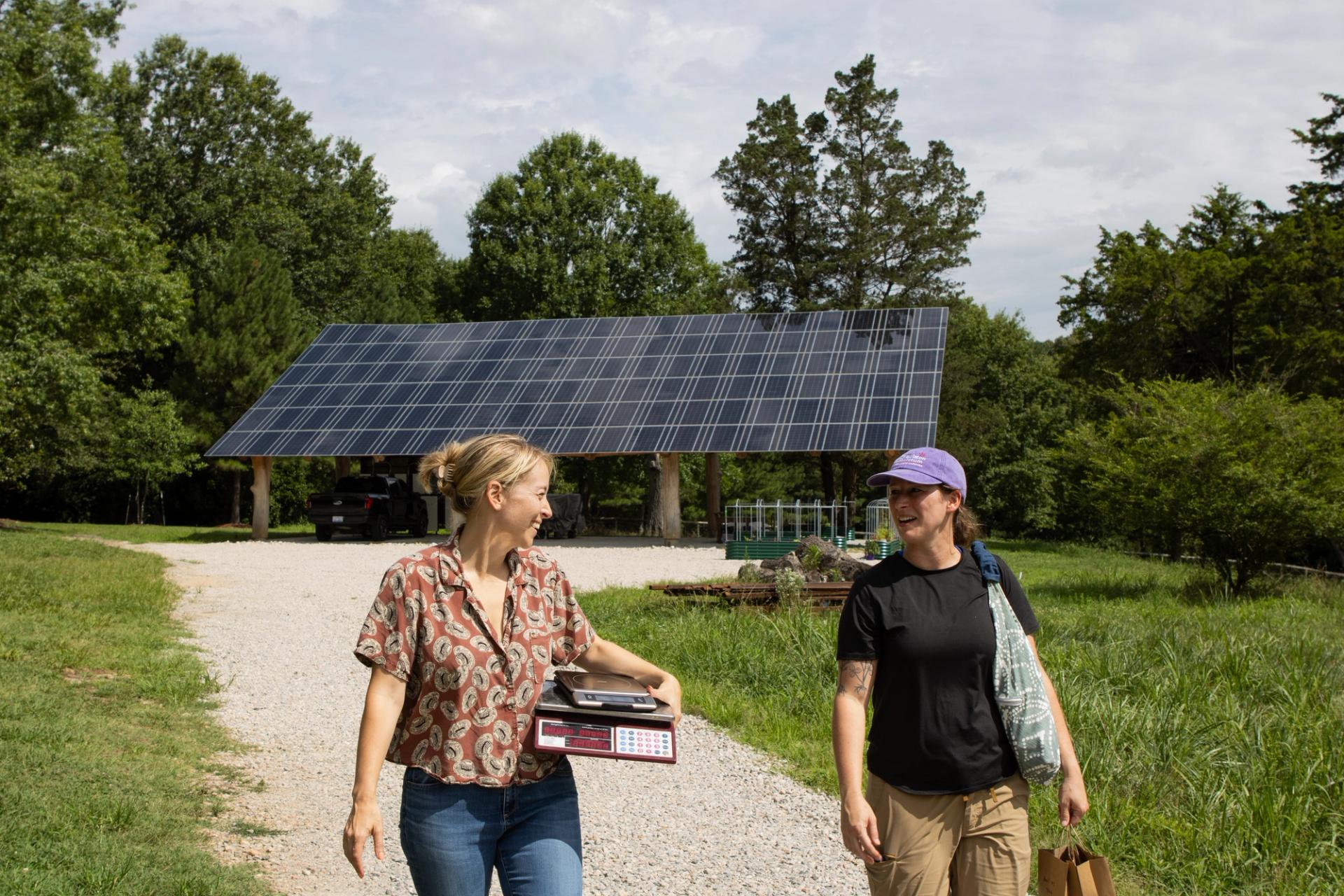
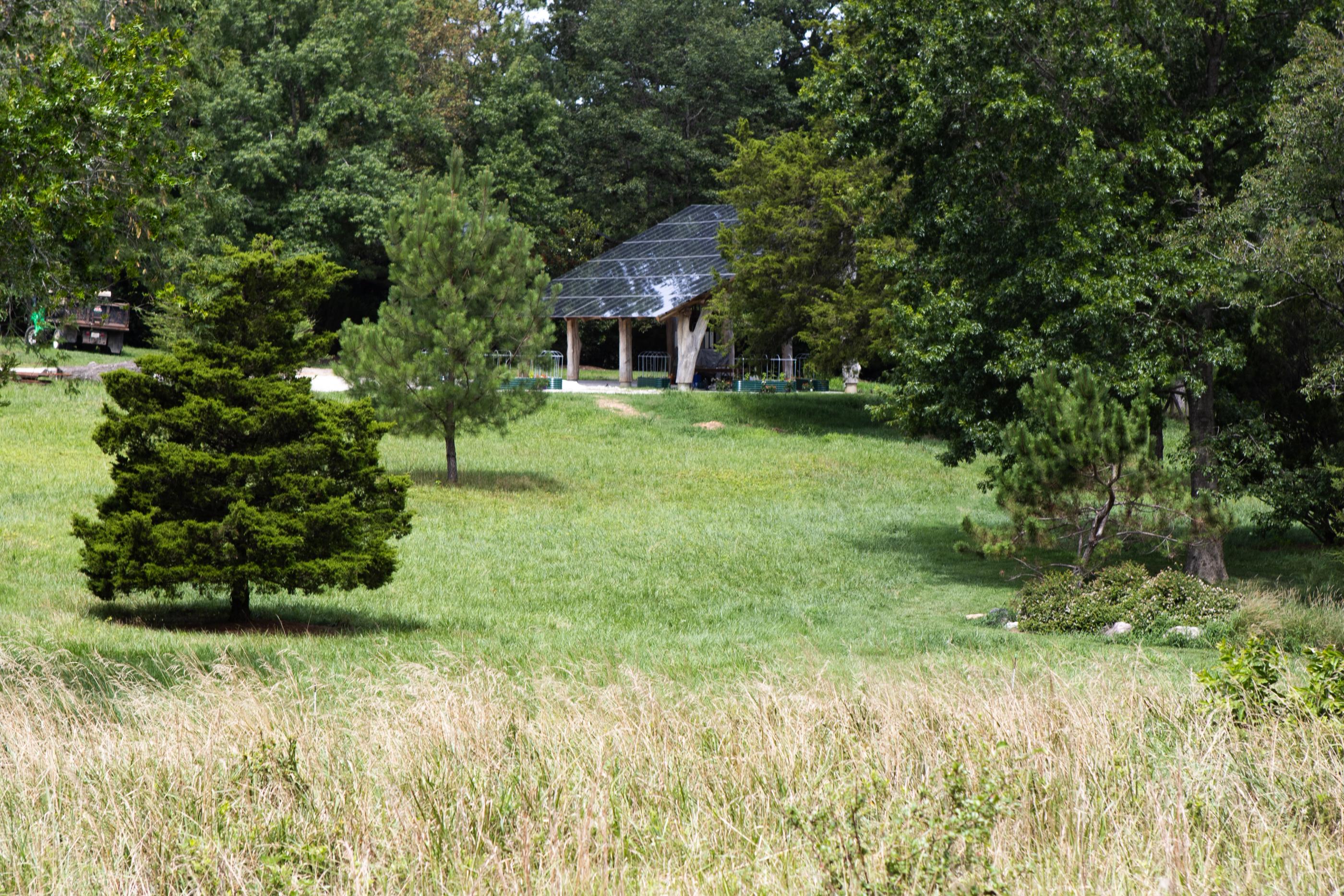
On a steamy July morning, UNC Gillings Master of Public Health (MPH) student Libby Meier packs supplies and makes the five-minute walk from Burkett Farm’s container barn towards a basketball court-sized solar panel in the next field over. She is joined by Kait Goalen, program director at Burkett Farm.
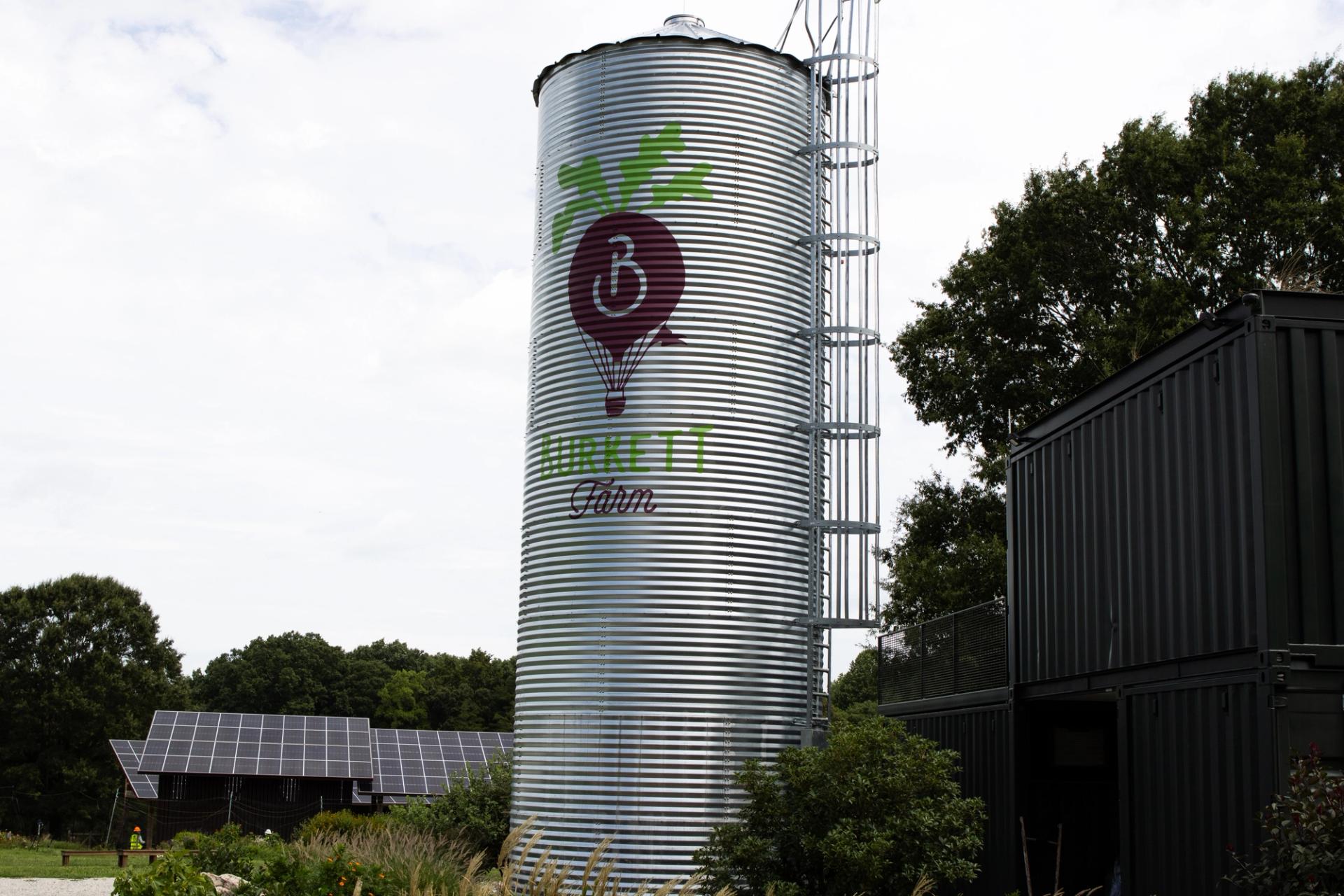
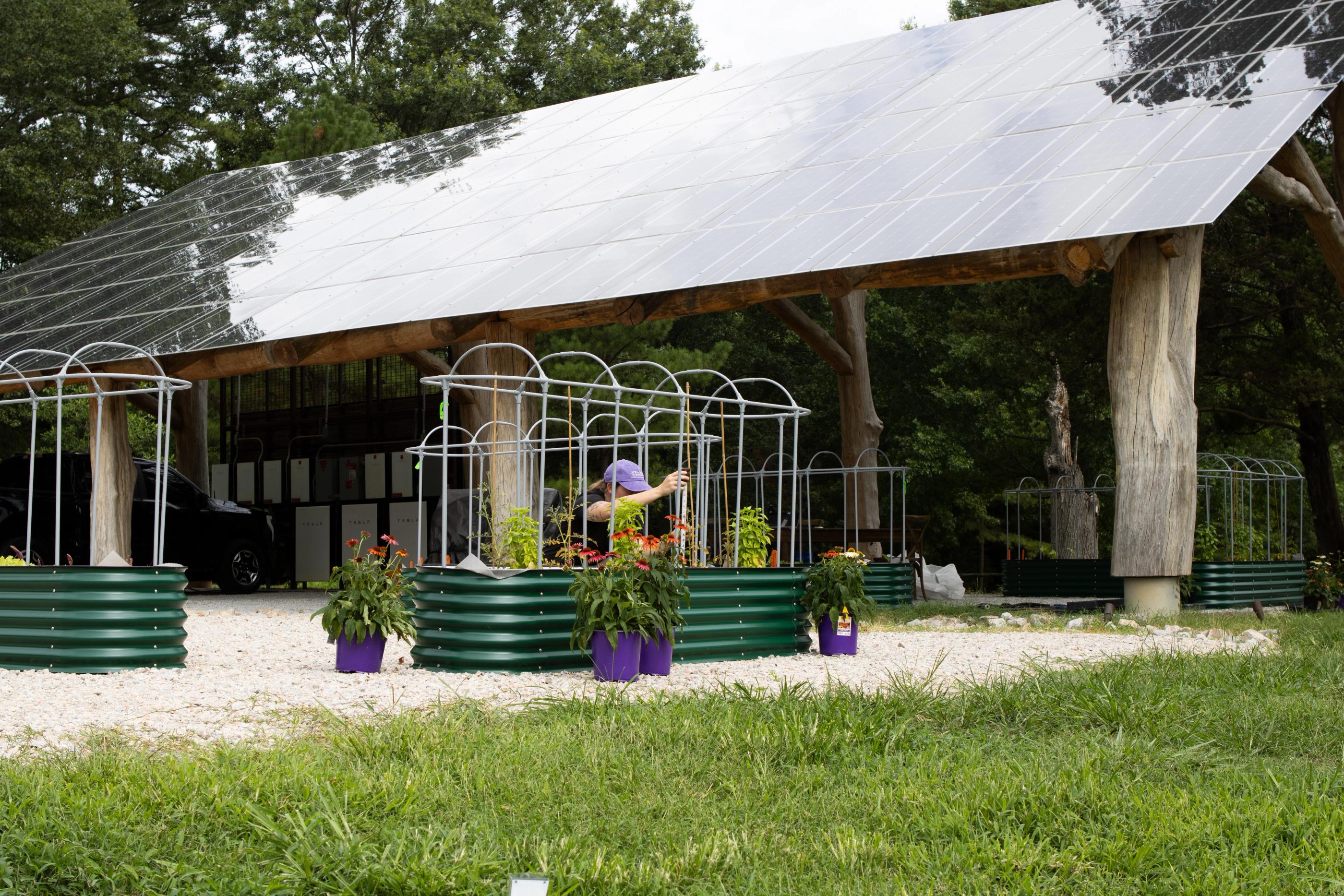
Burkett Farm, located in Raleigh, North Carolina, and founded in 2014, is a four-acre climate-smart agricultural site that grows produce and flowers using regenerative farming practices. The farm donates much of its harvest to community food access partners and works with local organizations to strengthen resilient food systems. Alongside production, Burkett Farm serves as an educational hub hosting workshops, field trips and community events that help people learn about sustainable agriculture, land stewardship, and the connections between food, climate and community.
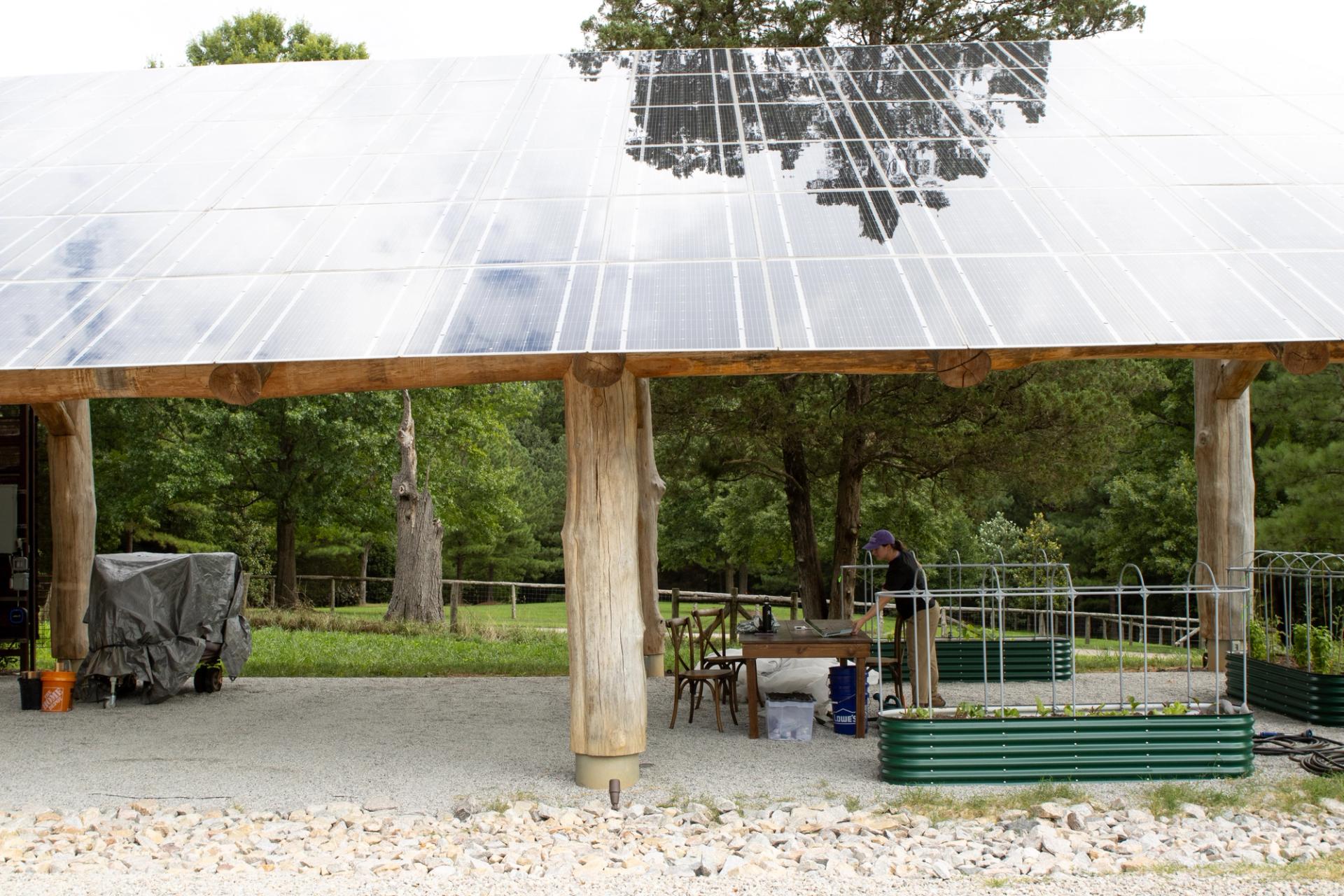
Though Libby, who is in the Nutrition, Food Systems and Health concentration at Gillings, has worked on various farms over the years, she is new to the agrivoltaics farming method. Agrivoltaics involves locating agricultural production, such as crops, livestock or pollinator habitats, underneath or between rows of solar panels.
Libby is at Burkett Farm as a part of her Gillings MPH practicum experience. The practicum is a 200-hour planned, mentored and evaluated applied practice experience that gives students an opportunity to use their MPH training in a professional public health setting.
Libby’s summer practicum, titled Agrivoltaics for Community Resilience Hub Project Design, is twofold. First, she is primarily responsible for growing vegetables in two different environments (full sun and underneath the solar panel) and collecting data on each plot. The second part of Libby’s practicum, in collaboration with Kait, is conducting a community needs assessment with the Town of Enfield in Halifax County, NC, and specifically Enfield Energy Futures, who have expressed interest in using agrivoltaic methods in a community garden setting.
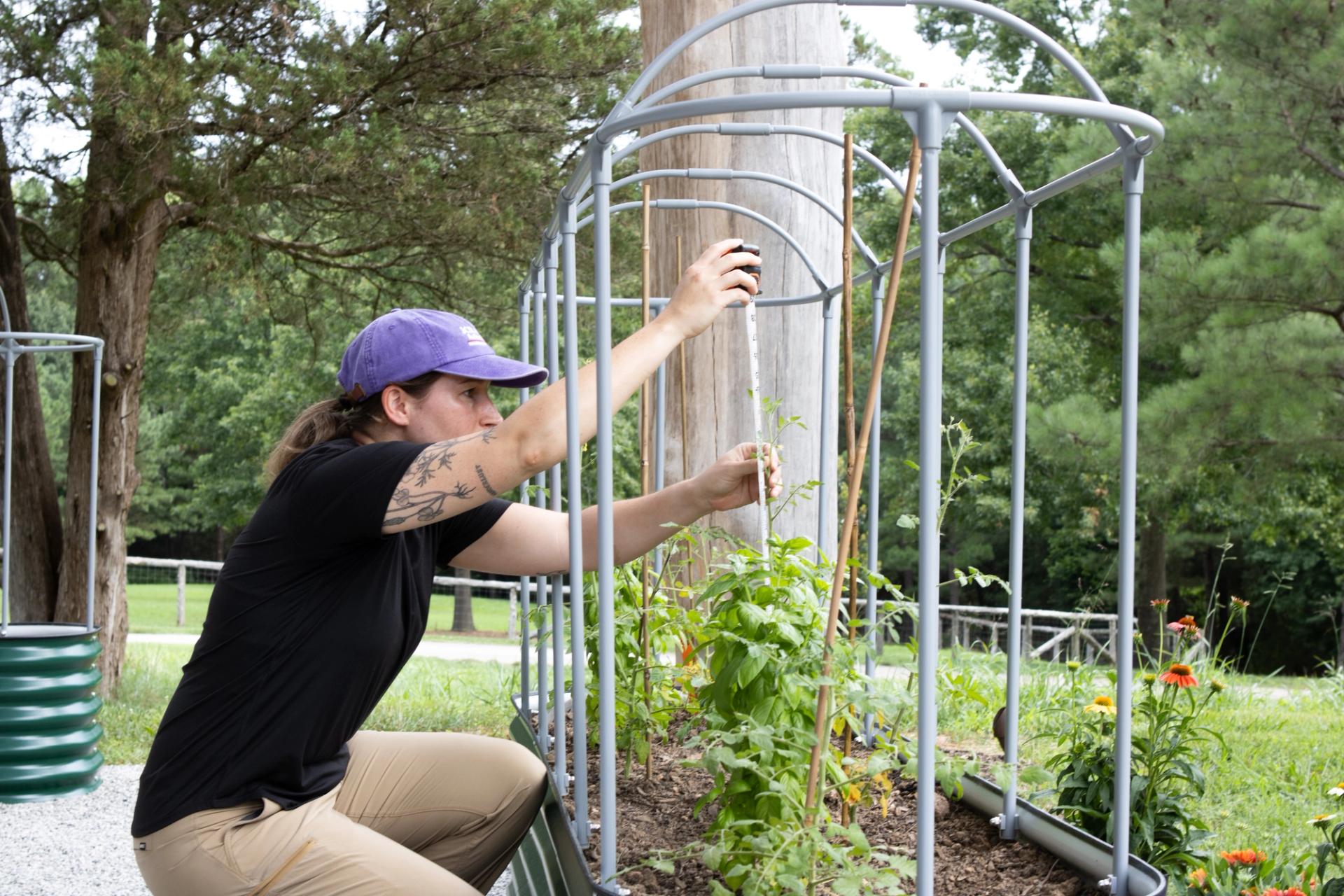
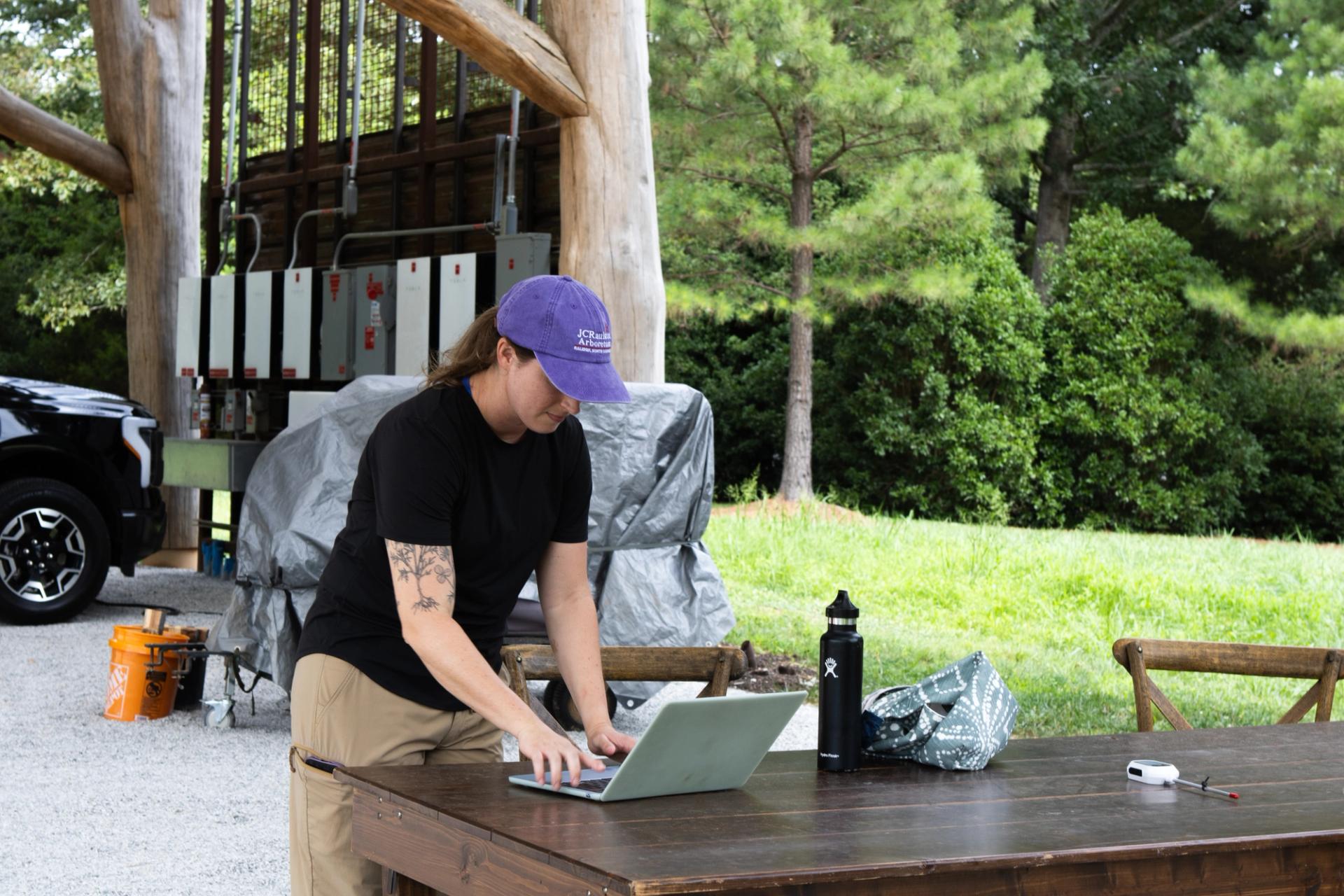
Once at the solar panel, Libby jumps into action by first measuring the height of the tomato plants growing under the panel and entering that data into a spreadsheet. She then repeats that step for the tomato plants in the full-sun beds just out of the shadow of the giant solar panel. She records plant heights weekly to track growth and compare crops under the solar panels with those in full sun.
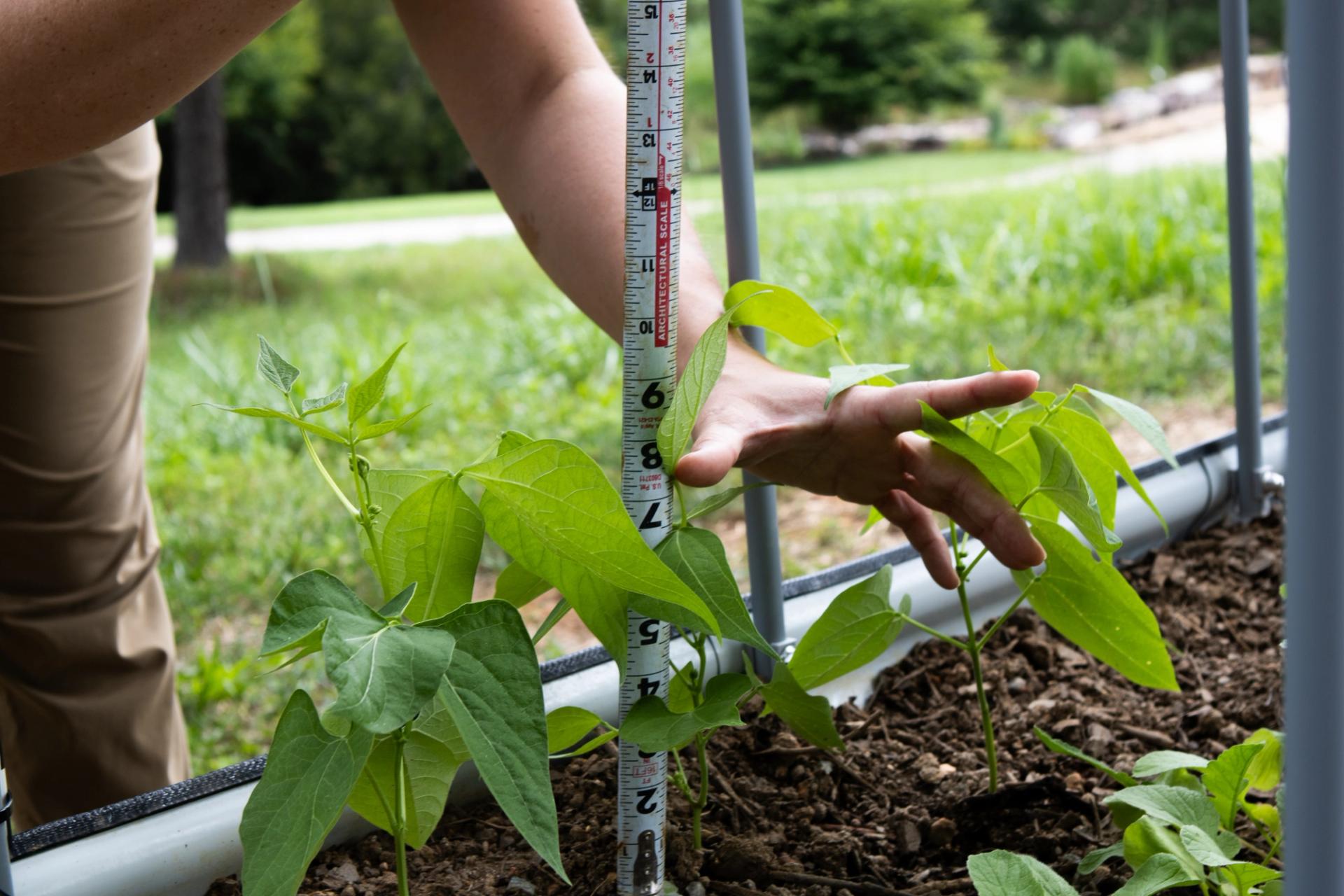
She repeats the steps for the basil and beans.
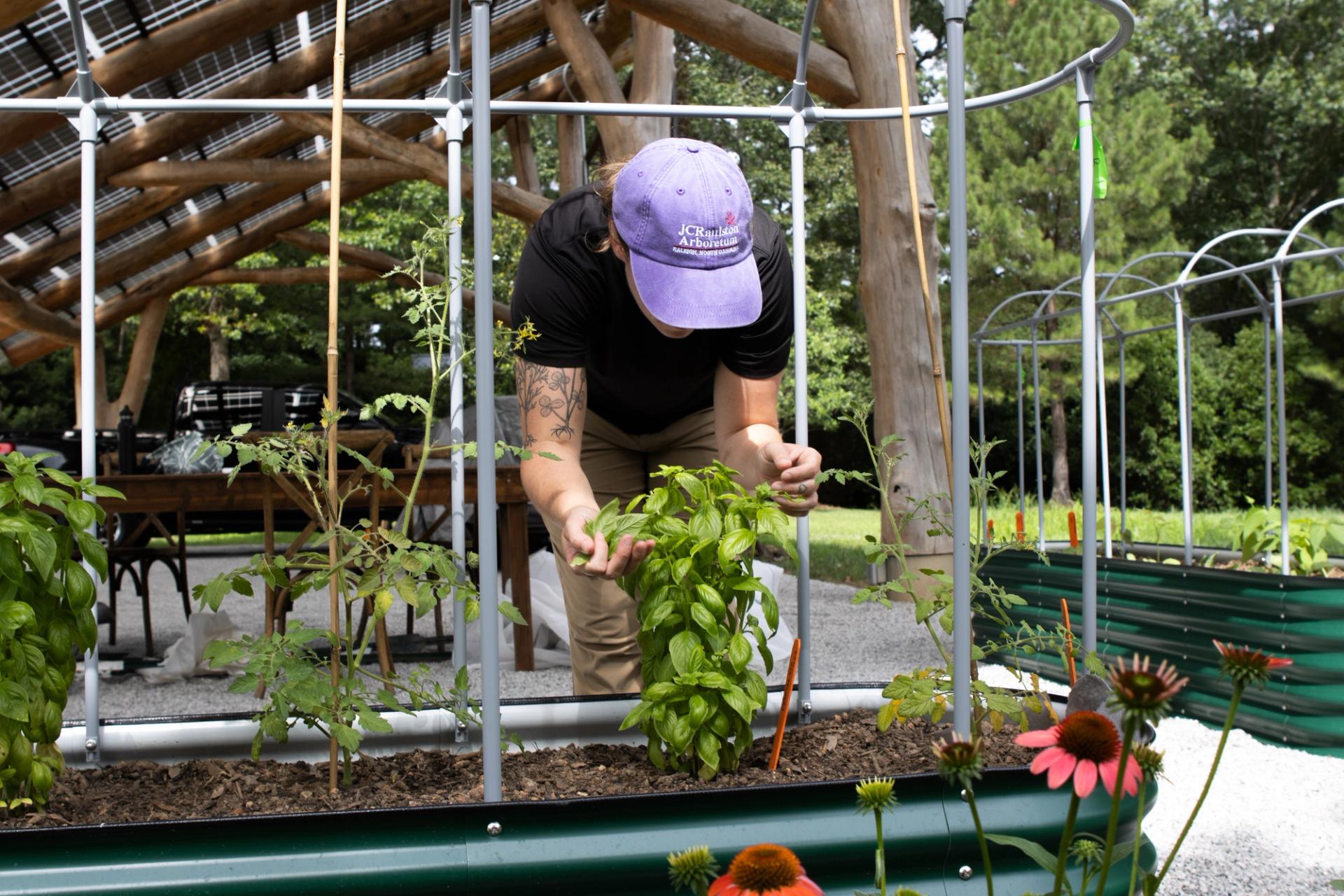
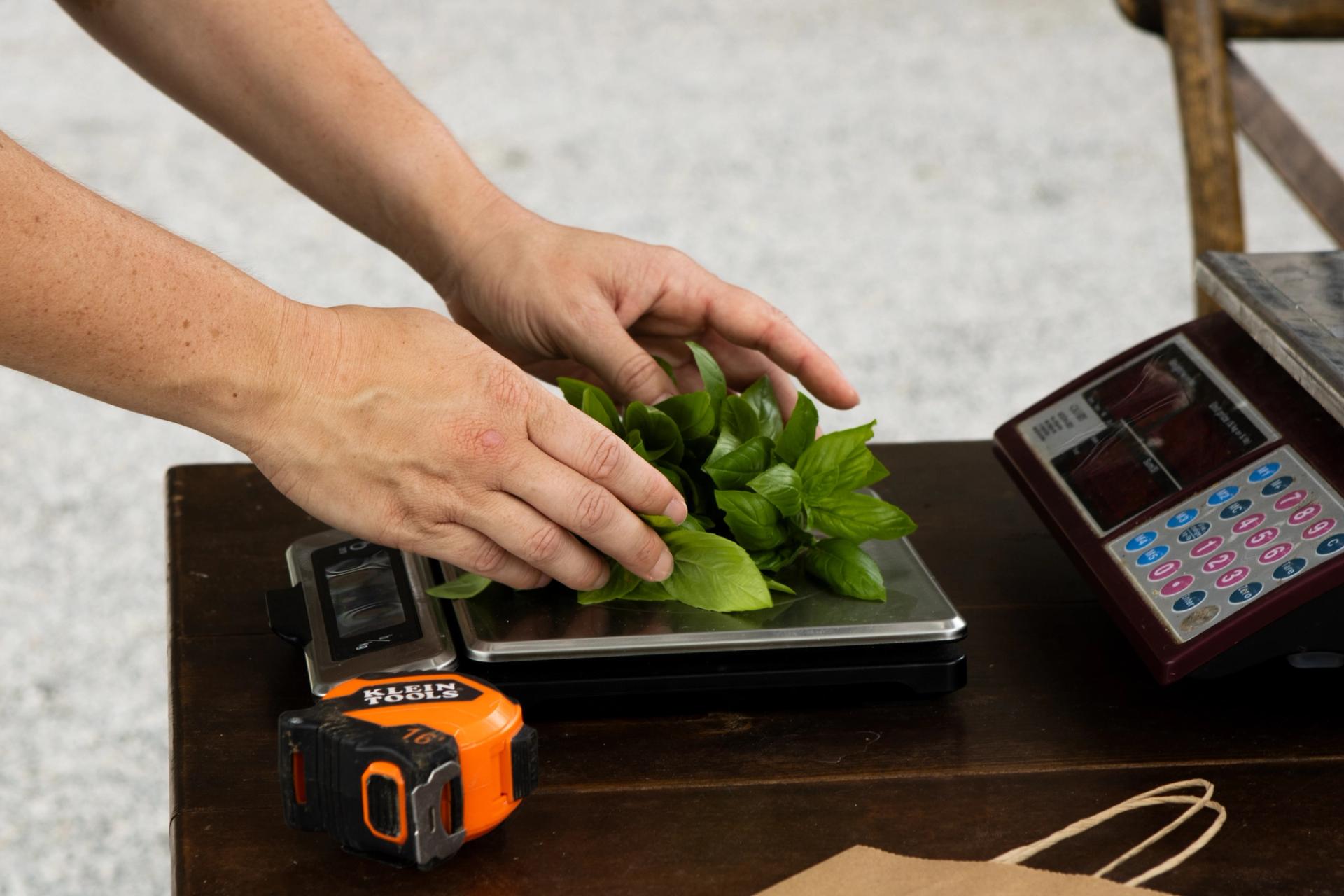
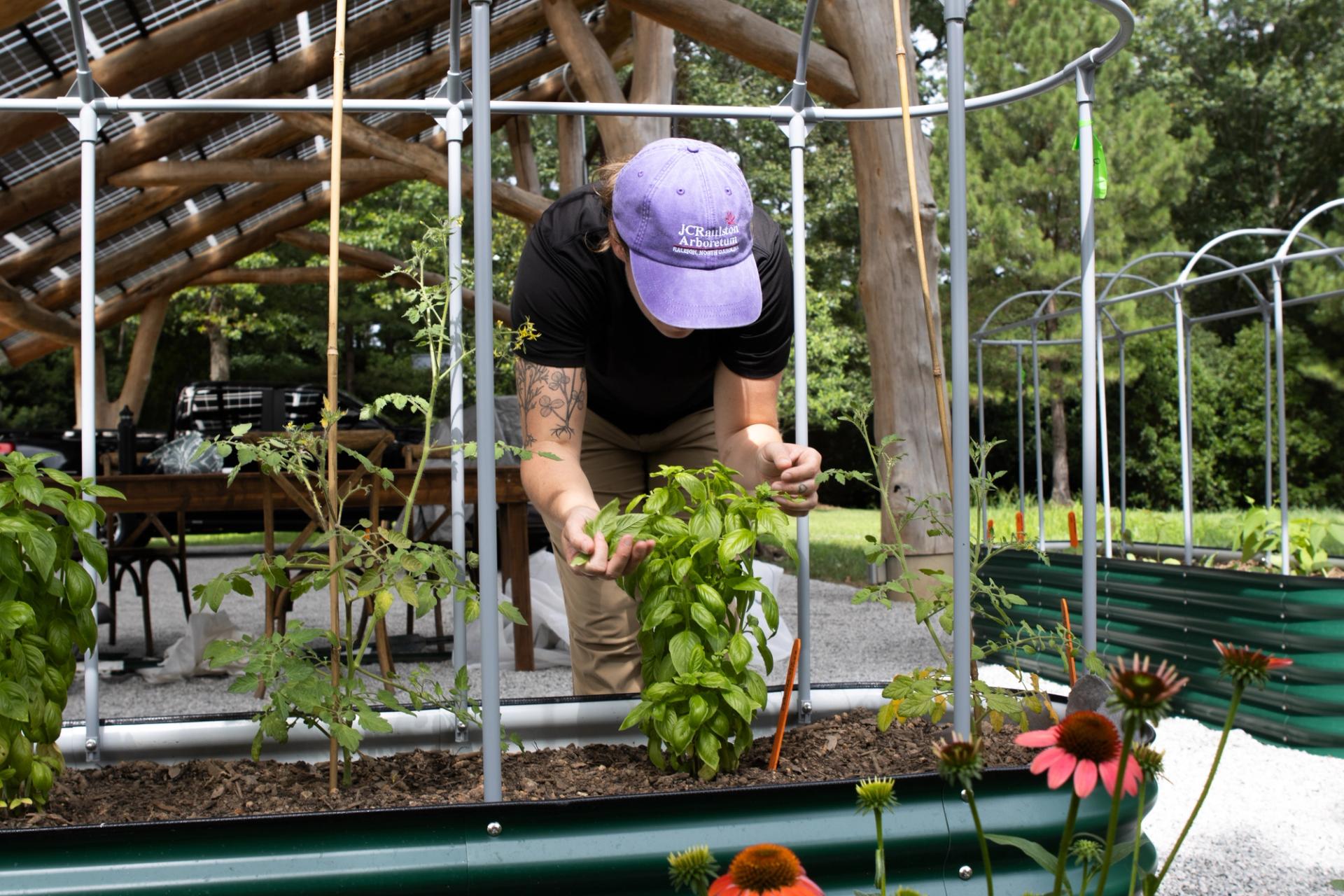
She also harvests basil — their second harvest of the season. She pinches off the tops down to the most recent node and weighs the harvest. Basil grown under the solar panels weighed 0.7 ounces; basil grown in full sun weighed 1.1 ounces.
To guide the trial, she is testing the hypothesis that co-locating crops beneath solar panels may alter microclimate conditions in ways that meaningfully affect crop growth, yield, bolting timelines and nutrient status. Specifically, she is examining whether the reduced light intensity and moderated temperatures under the panels could slow heat-stress responses in crops, extend harvest windows during peak summer heat, reduce bolting sensitive crop varieties and influence biomass accumulation compared with full-sun beds. The trial itself is structured as six mirrored raised beds — three under the photovoltaic panels and three in full sun — with the same crops planted in corresponding beds. This paired layout allows her to compare each crop directly across the two microclimates; for example, the tomatoes in the shaded bed align with tomatoes in the full sun bed, and the same is true for basil, beans, lettuce, chard and radishes. By keeping the bed layout and crop selection consistent, she can isolate the effects of shade and temperature differences created by the solar array and evaluate how agrivoltaics influences plant performance.
By collecting measurements in weekly growth rates, harvest weights, PAR (Parabolic Aluminized Reflector) light meter and leaf tissue analysis data, she is consistent with the practicum’s stated goals, “evaluating whether small-scale agrivoltaics food production can serve as a viable and replicable component of community resilience hubs across North Carolina.”
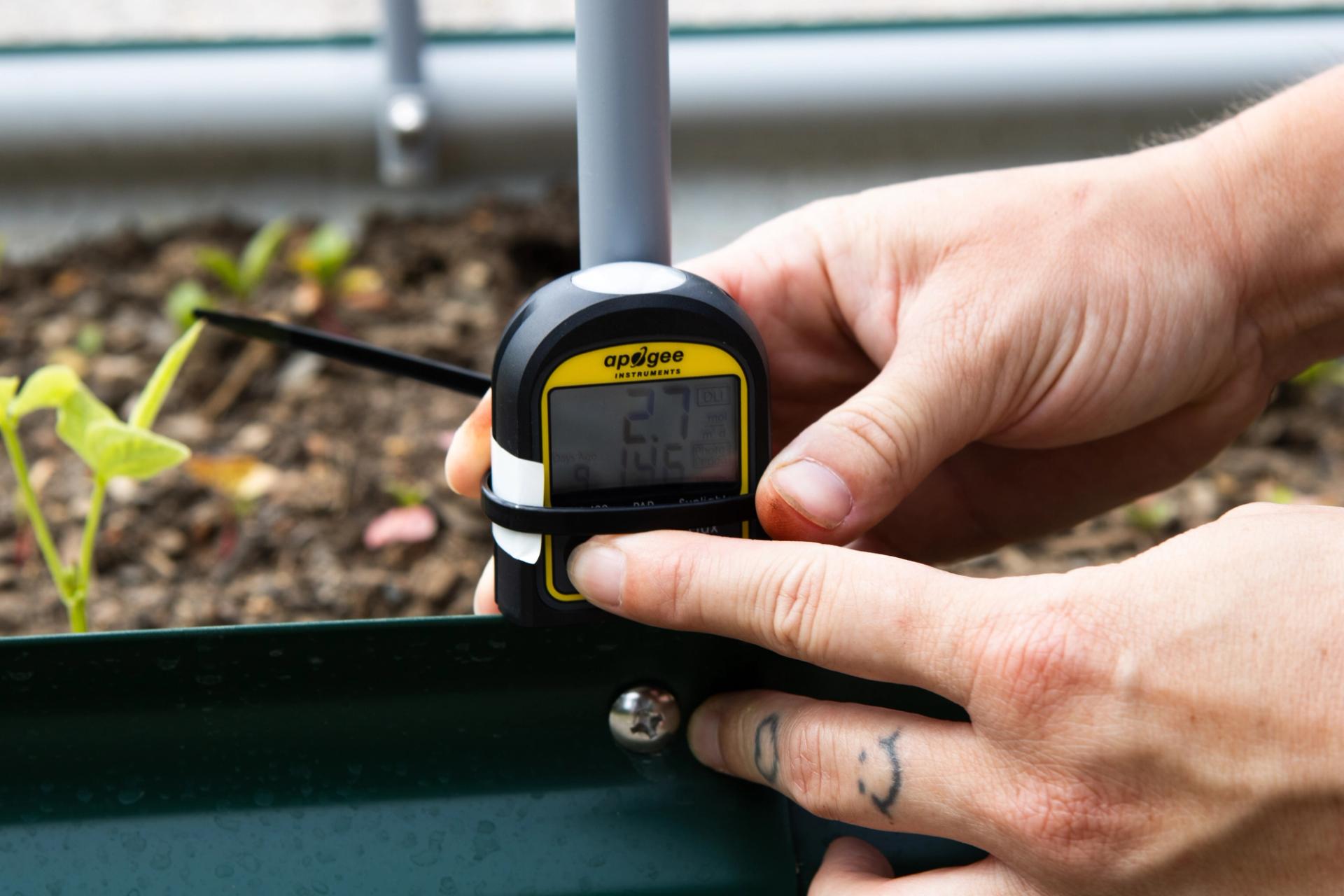
Though there have been some equipment-related and flower pollination challenges along the way, the data collection has continued. “We’re constantly balancing scientific rigor with practical needs for teaching and community relevance,” Kait says. “Whenever we intervene — pest management, soil amendments — we do it consistently across both plots to keep variables controlled.”
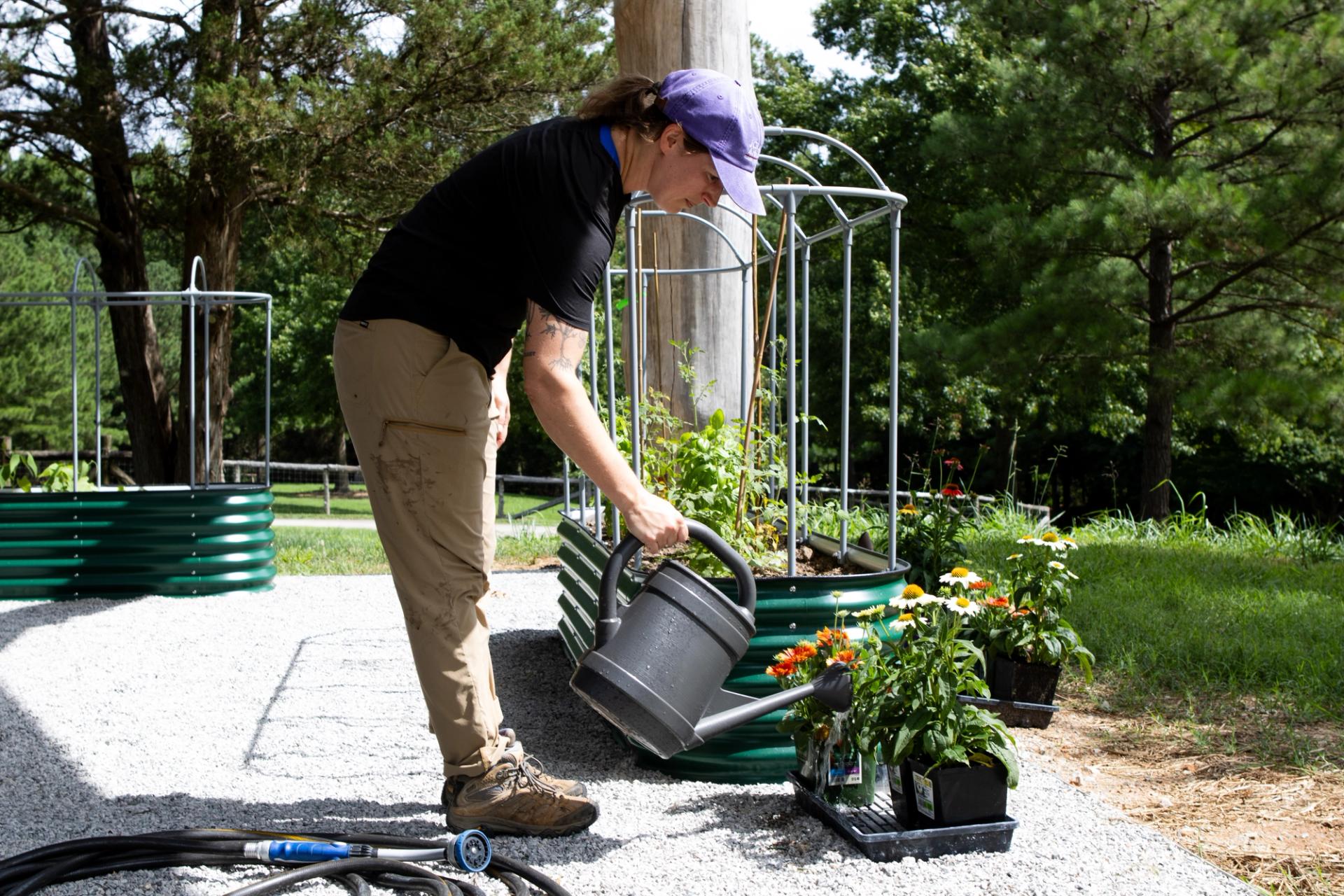
As a part of this work, the community needs assessment provides essential context for Enfield Energy Futures, who are working closely with Libby and Burkett Farm to shape the future agrivoltaics garden, as well as food and nutrition programming. The assessment draws from conversations and survey responses gathered at Enfield Energy Futures’ monthly town meetings, where residents share food access challenges, preferred crops, and interest in garden-based or cooking activities. These insights help clarify how an agrivoltaics garden could support local priorities, from fresh produce distribution to hands-on nutrition education.
Together, the qualitative findings and the growing trial data allow Burkett Farm to provide Enfield Energy Futures with high-level crop recommendations for their future agrivoltaics garden, as well as guidance for nutrition education programming to accompany agricultural production. This includes translating crop-performance insights from the Burkett Farm demo site, identifying starter crops suited to agrivoltaics conditions, outlining distribution pathways through trusted partners and shaping workshop concepts that align with what residents want to learn. The combined approach ensures that Enfield’s garden and food programming are not only technically feasible, but also responsive to community-identified needs and grounded in the realities of Halifax County’s food access landscape.

Back at the container barn, Libby thinks about her first year in the MPH program, and how the coursework prepared her for this experience. “The public health core classes have been helpful. SPGH 711, which covers biostatistics, prepared me for organizing and analyzing data. The systems courses (SPGH 721 and 722) helped with community needs assessments, qualitative methods and ethics. I’m excited to use those skills when meeting with the Enfield residents over the next few weeks.”
Through the practicum, Libby has learned more technical skills than she previously had, saying “I’ve learned a lot about data collection, building spreadsheets, organizing quantitative data and also qualitative skills — community engagement, designing equitable interview questions and preparing surveys.”
Libby enters more data into the spreadsheets. As she types on her laptop, she reflects on her practicum thus far, “Agrivoltaics seems like a field I could enter, and this experience will be valuable when applying for jobs. I’m still exploring options — my nutrition coursework this upcoming academic year will open more doors — but this practicum has expanded my interests and my network.”
For her, the most meaningful part of the work is imagining what comes next for communities adopting agrivoltaics, “I hope this project helps show that agrivoltaics isn’t just a technical model — it’s a community model,” Libby says. “If towns like Enfield can use solar-supported gardens to grow food, teach skills and strengthen local resilience, then agrivoltaics becomes a tool that supports both climate goals and everyday life. My hope is that more communities can adopt this model in ways that fit their needs and build long-term food and nutrition security.”
———
Have an idea for another story that would work well as a photo essay? Contact us to give us a heads up at sphcomm@unc.edu.
