What’s in the water? Sampling for waterborne amoeba in Northern Orange County ponds
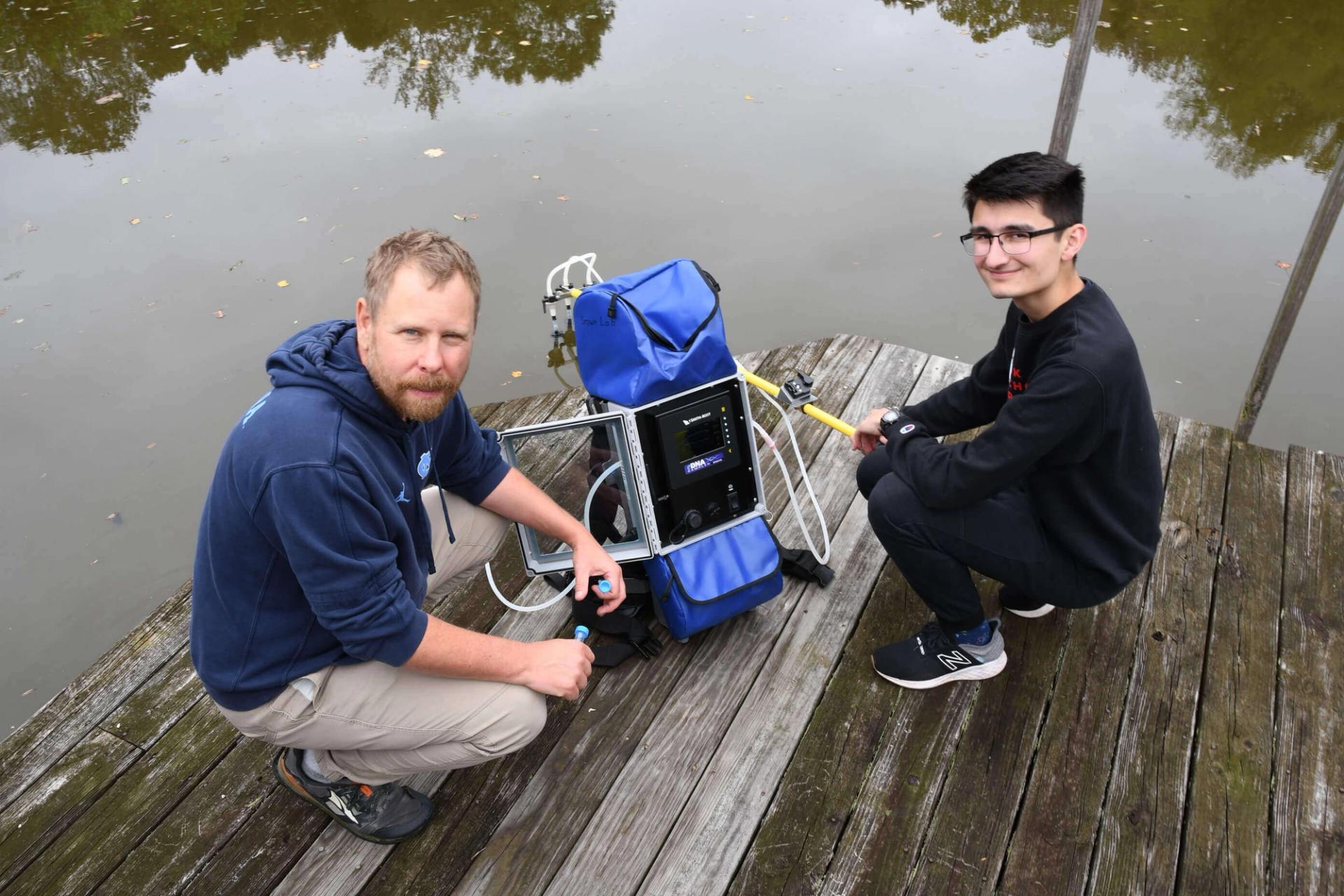
On an overcast October morning, researcher and faculty member, Joe Brown, PhD, PE, and second-year Master of Science in Environmental Engineering student Frederik Mendoza Ulken load their water sampling equipment into a minivan and start a 35-minute trek from the UNC Gillings School of Global Public Health to northern Orange County in the heart of North Carolina.
Along the way, Brown and Mendoza Ulken discuss the fieldwork they’ll be doing and the importance of understanding more about Naegleria fowleri (often referred to as N. fowleri), an amoeba that causes Primary Amoebic Meningoencephalitis (PAM) and is often referred to as the “brain eating amoeba.”
It’s true that PAM is rare: Only 167 cases were reported in the United States between 1962 and 2024. However, it is also terrifyingly fatal: Only four out of 167 patients survived.
As they talk, Brown and Mendoza Ulken share tragic stories about families who have been personally affected by this amoeba, including a six-year-old boy named Aven. After his tragic passing in 2021, Aven’s family established a nonprofit called Amazing Aven’s Quest for Amoeba Awareness that is working to prevent cases of PAM by better understanding the amoeba that causes it.
Details about how to predict where N. fowleri exists are difficult to come by, but Brown is hopeful that outings like today’s can shed more light on where this microscopic amoeba lives.
“If we can identify factors that seem to drive high counts of Naegleria in water, and therefore increase the potential for infection, that could be used in prevention efforts,” he says.
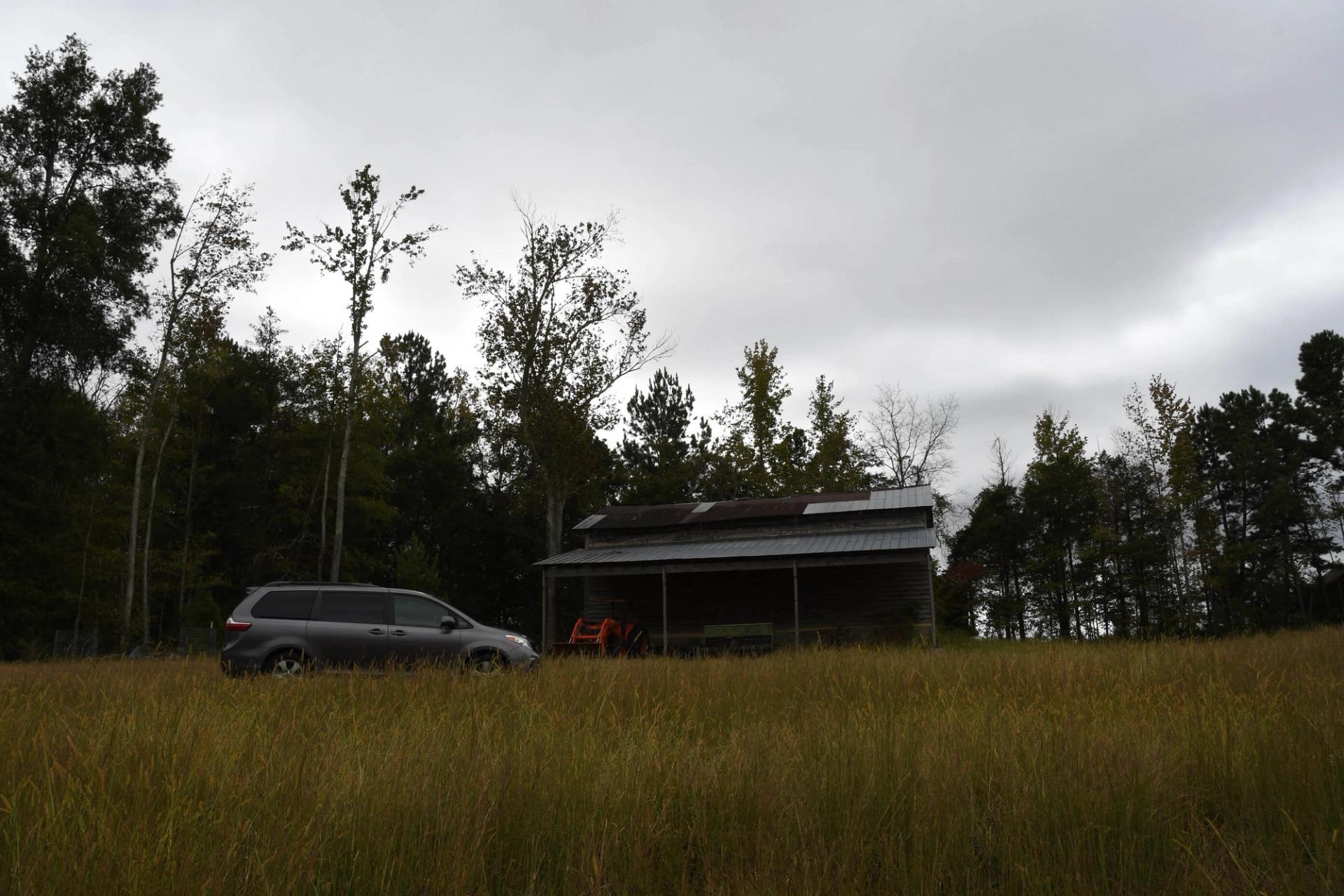
The minivan turns off a winding rural highway and onto a gravel road. Shortly, Brown creates his own path and veers off the gravel road and into a grassy field, eventually parking between two ponds.
Up the hill from these ponds is Maple Springs Farm, an organic farm that’s grown and sold a variety of fruits and vegetables for decades.
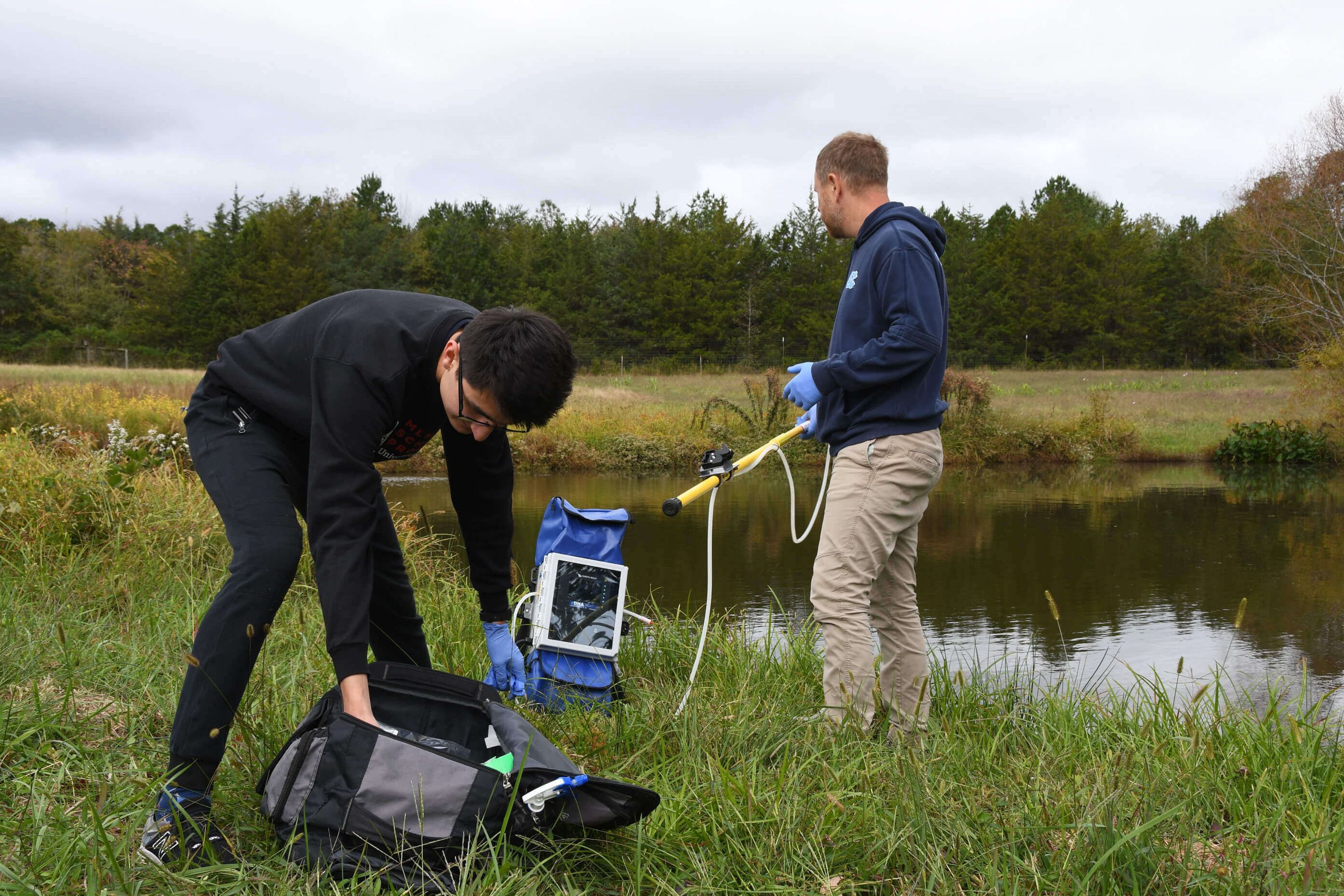
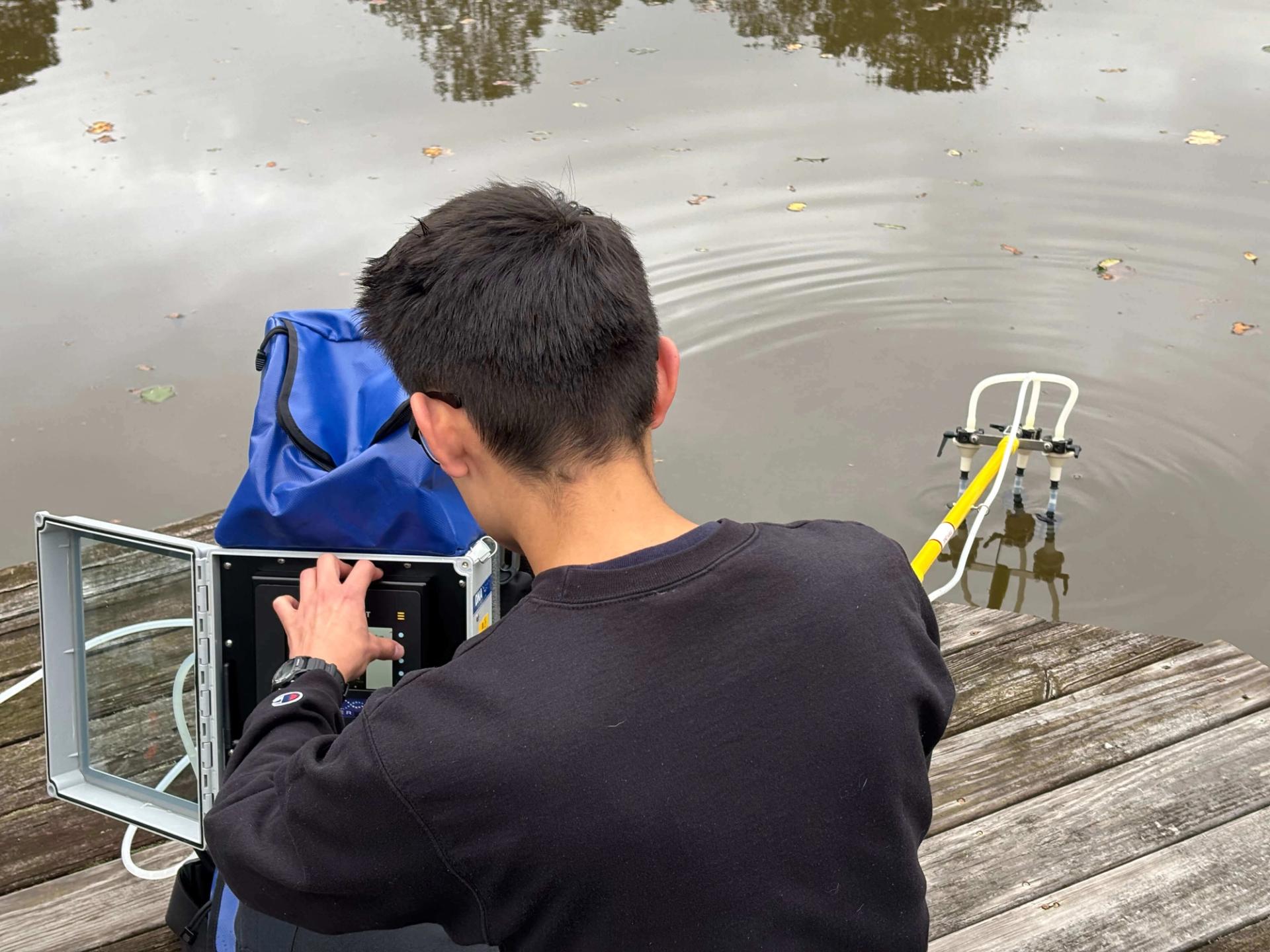
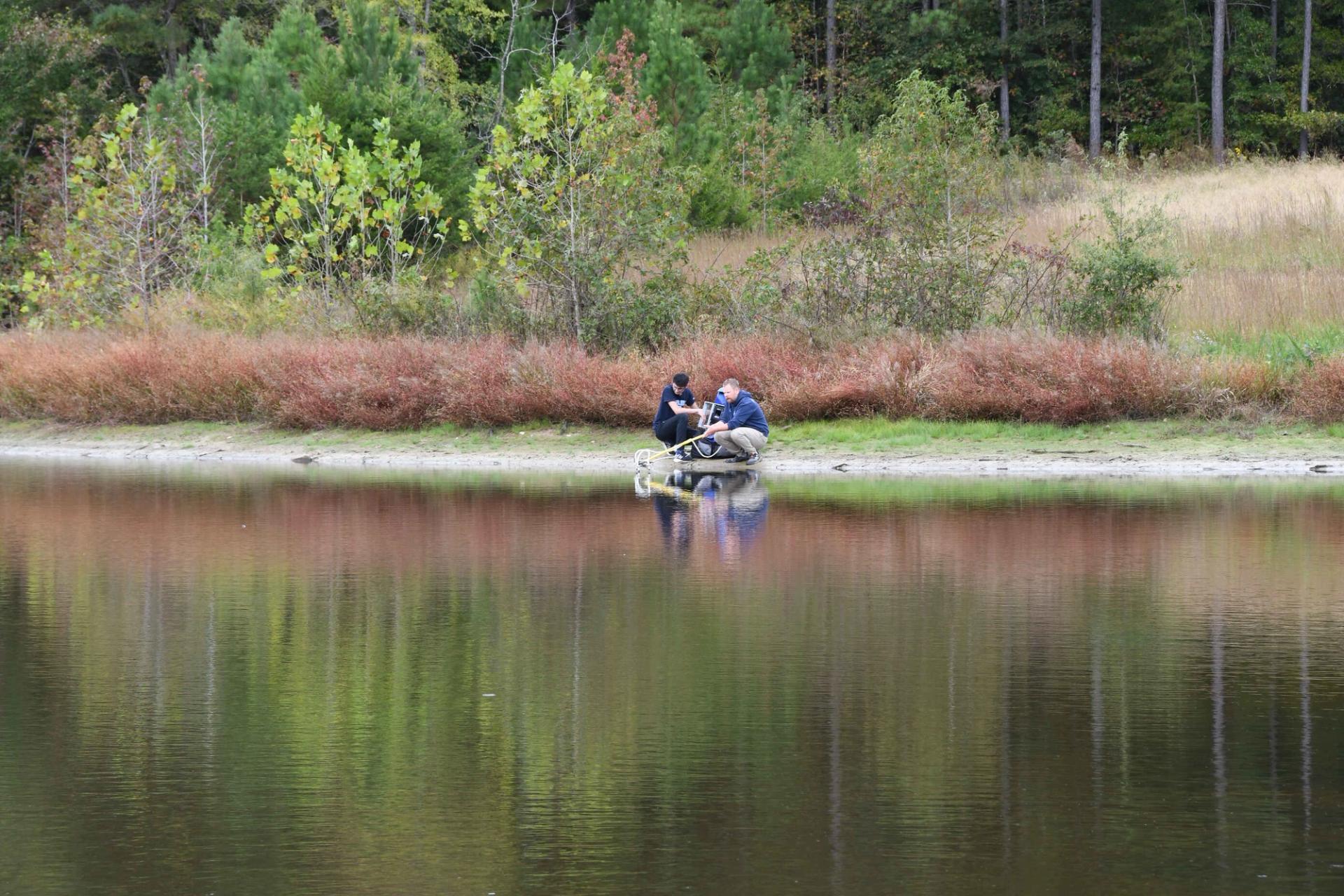
Once parked, Brown and Mendoza Ulken jump into action. They quickly assemble their water sampling equipment. Today, they are using a Smith-Root eDNA sampler, chosen because it has key features that could help with the researchers’ prototype development. First, it is constructed so that the filters do not need to be handled prior to collecting samples, reducing potential measurement errors and contamination of the equipment. Next, the filters are attached to a rod which allows for easy handling during filtrations. Lastly, the system includes a variety of sensors which display pressure, flowrate and volume filtered on the front screen of the eDNA sampler (affectionately named the Jetpack). This helps the researchers observe how the system responds to different levels of water cloudiness and how quickly the flow rate slows down.
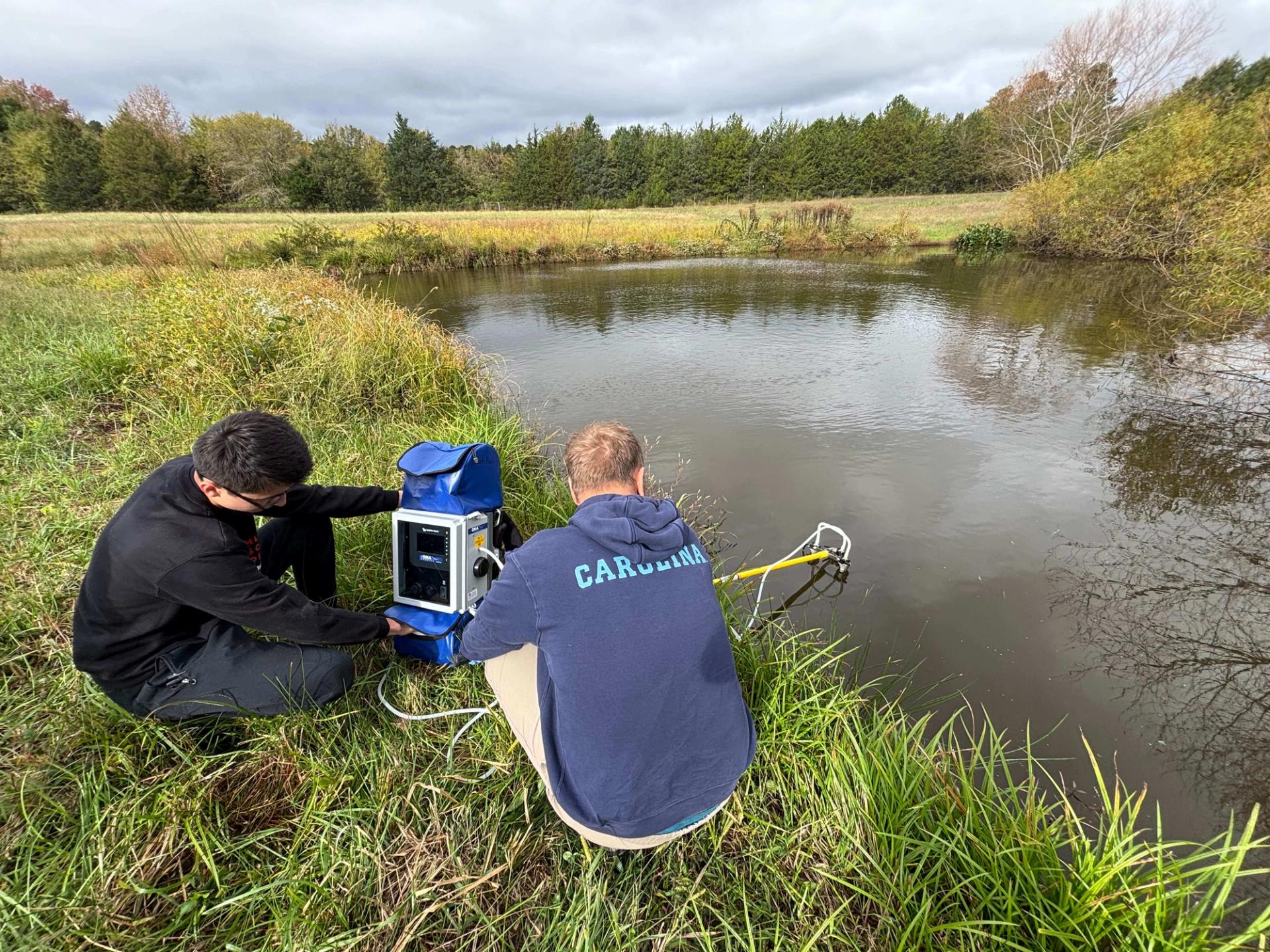
Once they collect sufficient samples from the first pond, they move on to its larger neighbor.
The second pond has a wooden boardwalk, which jets out 20 feet over the water. For decades, it’s been a jumping off point for tired Maple Springs farmers looking to cool off after a grueling day of work in the Piedmont heat. And therein lies the most common scenario for N. fowleri exposure — a high-risk (think cannonball) entry into a warm, freshwater lake, pond or river.
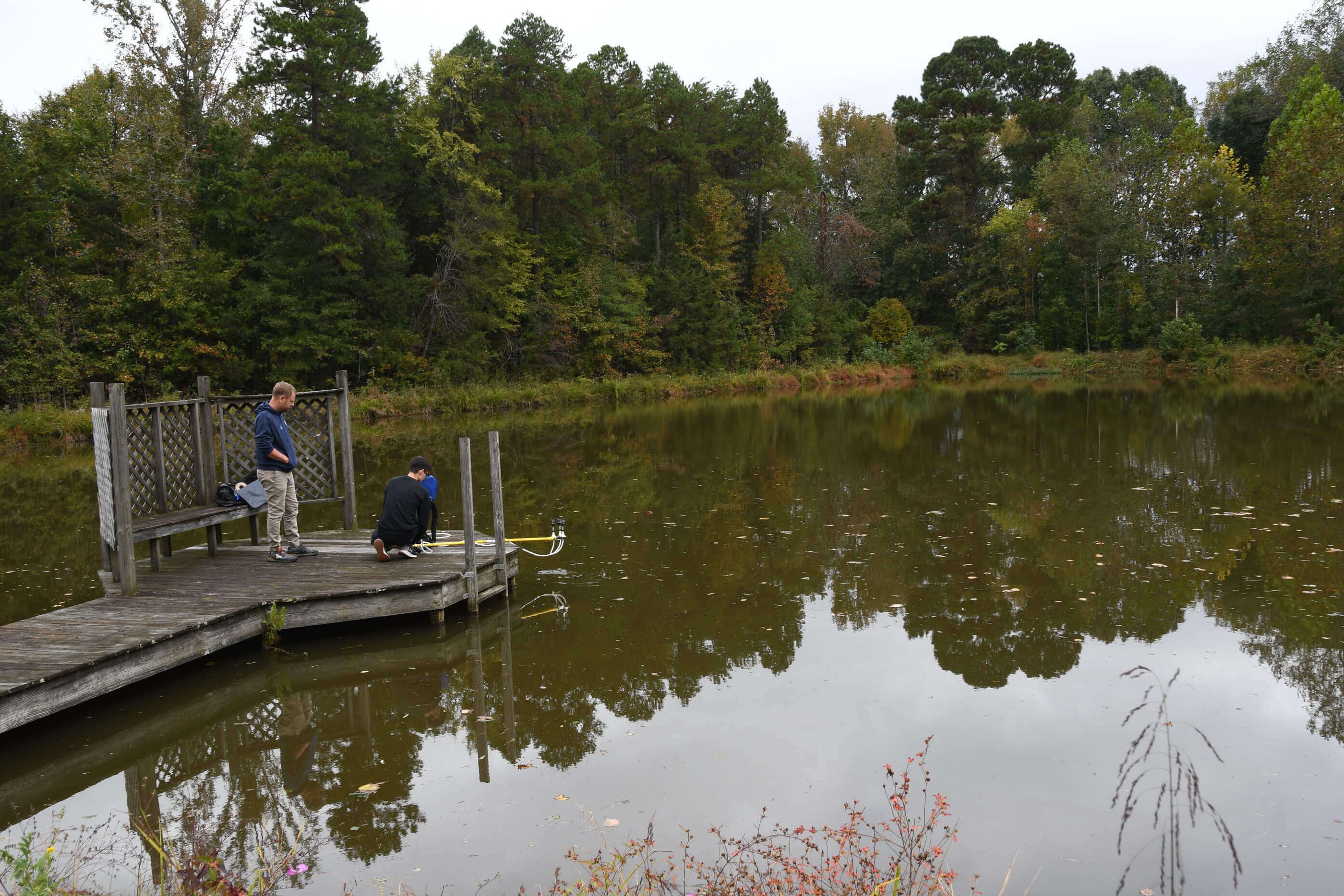
These bodies of water can heat up significantly in the summer sun, reaching high temperatures where N. fowleri thrive. They also contain nutrients and bacteria that N. fowleri feed on. So, these ponds are consistent with what N. fowleri ecology says would be a suitable habitat for the amoeba. That’s why Brown and Mendoza Ulken are here: These unassuming bodies of water are excellent sites to both test their field sampling methods and learn more about how N. fowleri varies in space and time. According to the CDC, infections often happen when it has been hot for long periods, resulting in higher water temperatures and lower water levels.
The researchers’ near-term goal for this project is to establish a simple, field-deployable, same-day results testing strategy to identify N. fowleri in recreational waters.
Ideally, this would take the form of a kit that could be used by anyone, including representatives from local government and nonprofits as well as other academics. Families and other individuals wanting to test the waters before swimming could also use this kit, too.
Their current water sampling program is focused on refining their methods — improving detection and time-to-result and understanding how to make the process more user-friendly and cost-effective. These are difficult problems to solve: Finding N. fowleri in a pond requires sampling a large amount of turbid water, that is, cloudy water filled with lots of non-target organisms. It's a needle-in-a-haystack type of problem that requires sophisticated methods for sampling, processing and analysis.
The researchers are looking to transcend those challenges and develop a detection tool that is both simple and robust.
Longer-term, they hope to conduct extensive sampling to gather data on when and where N. fowleri occurs, with the goal of advancing their understanding of the amoeba’s ecology.
As they pack their equipment back into the van, Mendoza Ulken reflects on the day’s work and what lies ahead.
“After today’s field sampling, we’ll return to the lab to check our findings and improve our monitoring methods,” he says. “Eventually, we will return to the field to repeat this cycle, perfecting our methods with each iteration. Once we have an optimized technique, we can start collecting large amounts of field data to inform models of how N. fowleri is distributed in the environment.”
On the drive back to the UNC-Chapel Hill campus, Brown says, “It’s a slow process, but one we hope can lead to a fit-for-purpose, widely deployable method. This project will have been a good investment if it results in even one life saved.”
———
Have an idea for another story that would work well as a photo essay? Contact us to give us a heads up at sphcomm@unc.edu.
