Through the Headset: A Humanitarian Simulation at UNC Gillings
You can’t send students to a war zone.
But for one week, they can step into the worlds that aid workers face.
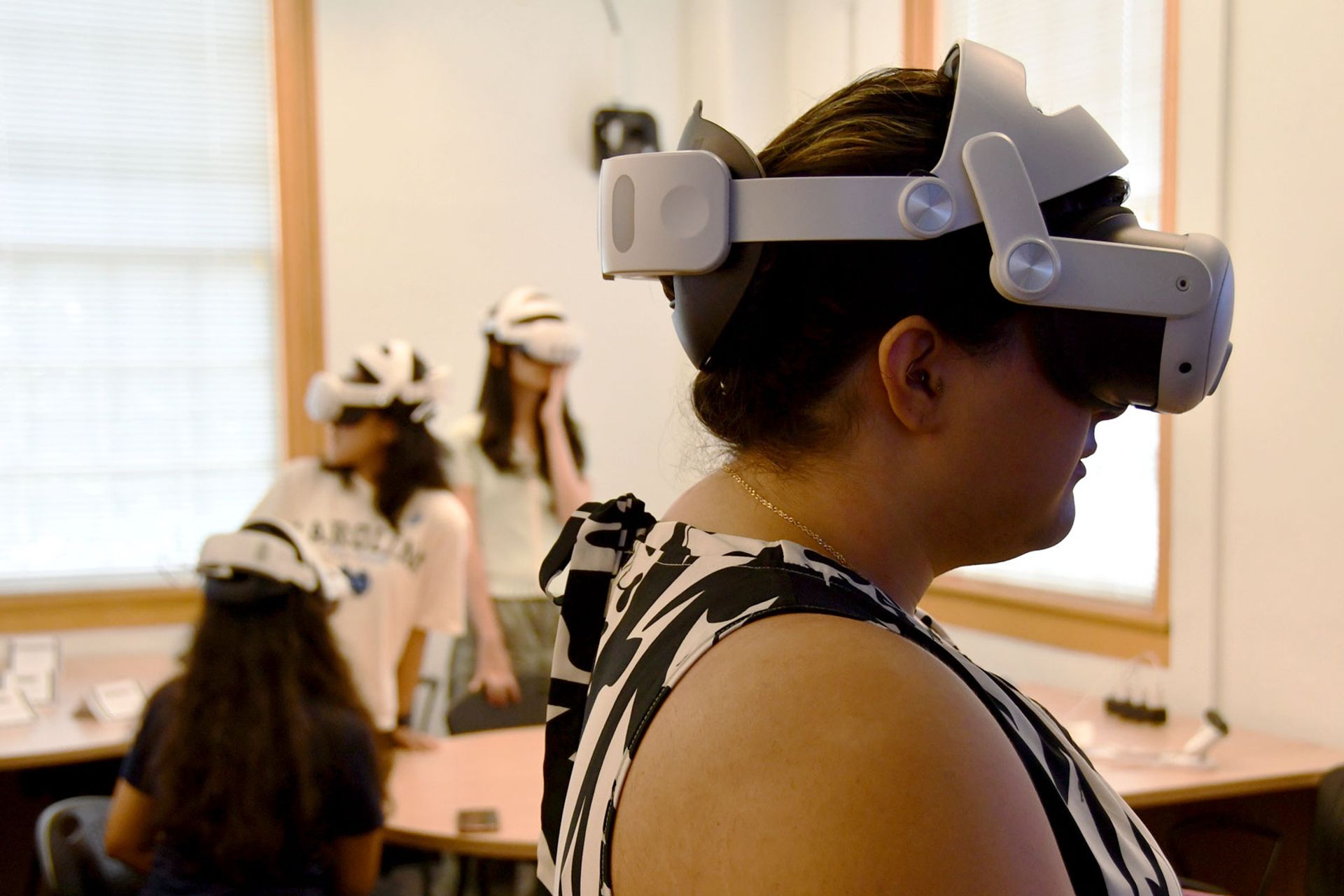
Here, on the second floor of Rosenau Hall at the Gillings School of Global Public Health, a former study space has been temporarily converted into a immersive learning experience. Students arrive one by one. Some straight from class; some from across campus.
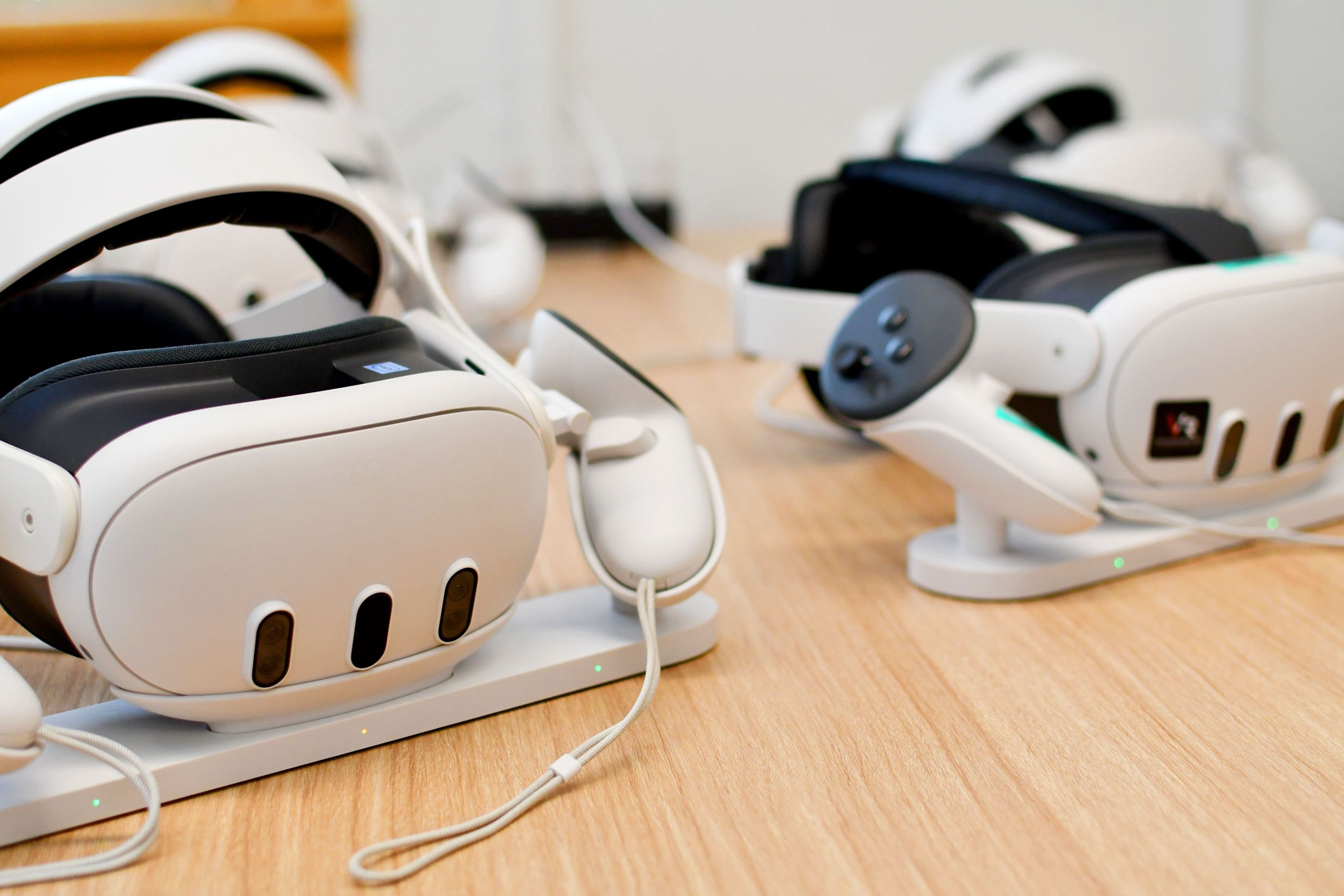
The simulations come from the International Committee of the Red Cross (ICRC), the Geneva-based humanitarian organization, custodian of international humanitarian law and developer of the VR/360° training used here.
For Associate Professor Dilshad Jaff, MD, who served as a wartime medic and later used the ICRC’s tools in the field, the aim is simple: bring evidence-based, immersive learning into a public-health classroom and make the lessons stick. The scenarios are general (and not always country-specific) while the 360° videos draw from real ICRC interventions. The result is a rare mix of intensity and care, with the headsets delivering urgency and the debriefs transforming it into understanding.
According to the International Committee of the Red Cross, there are currently over 110 armed conflicts ongoing around the world. These include wars, non-international armed conflicts and crises that often last for decades and displace millions of people.
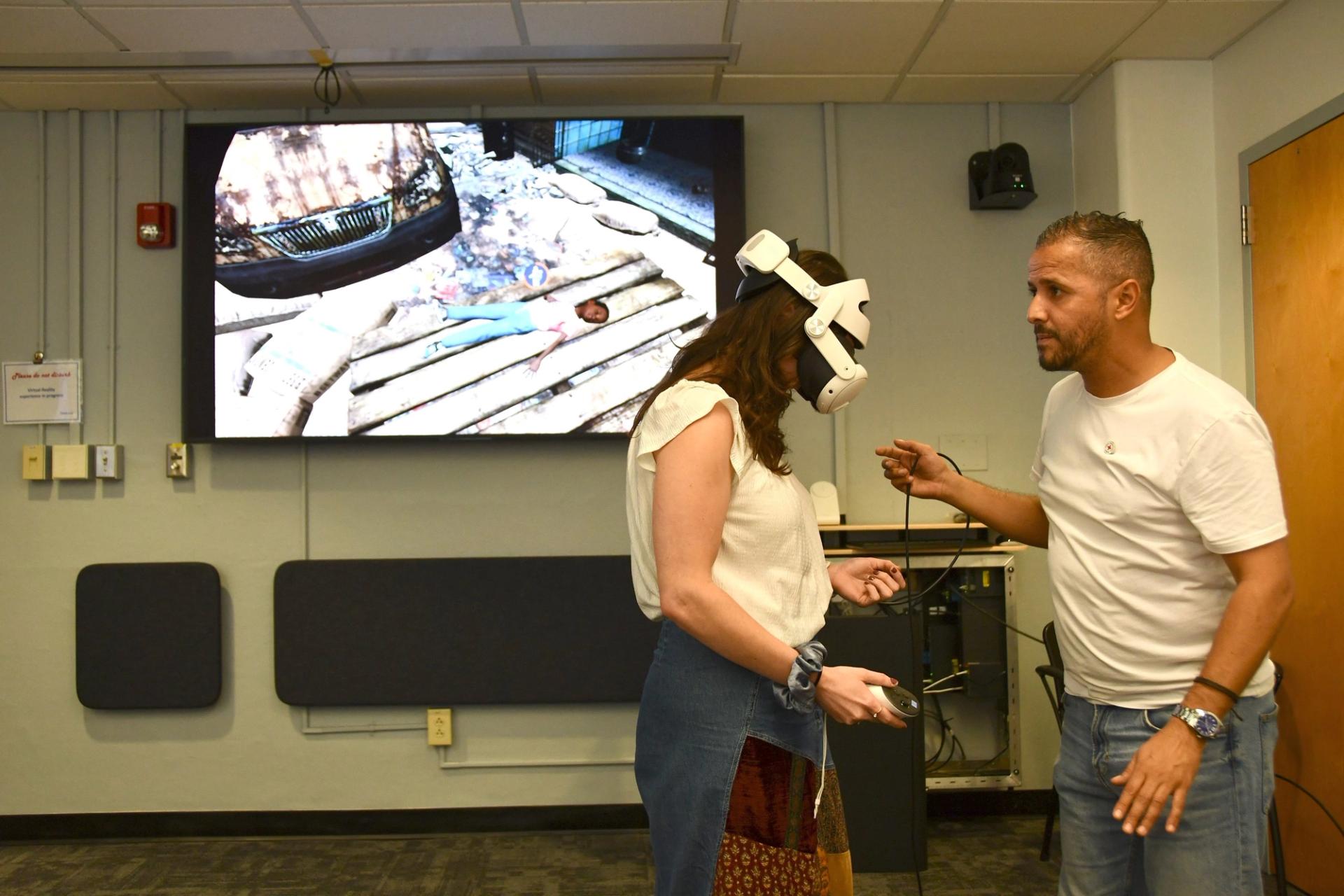
Issam Naime, the ICRC VR Training Team Lead, has traveled from Geneva to North Carolina for a 10-day visit.
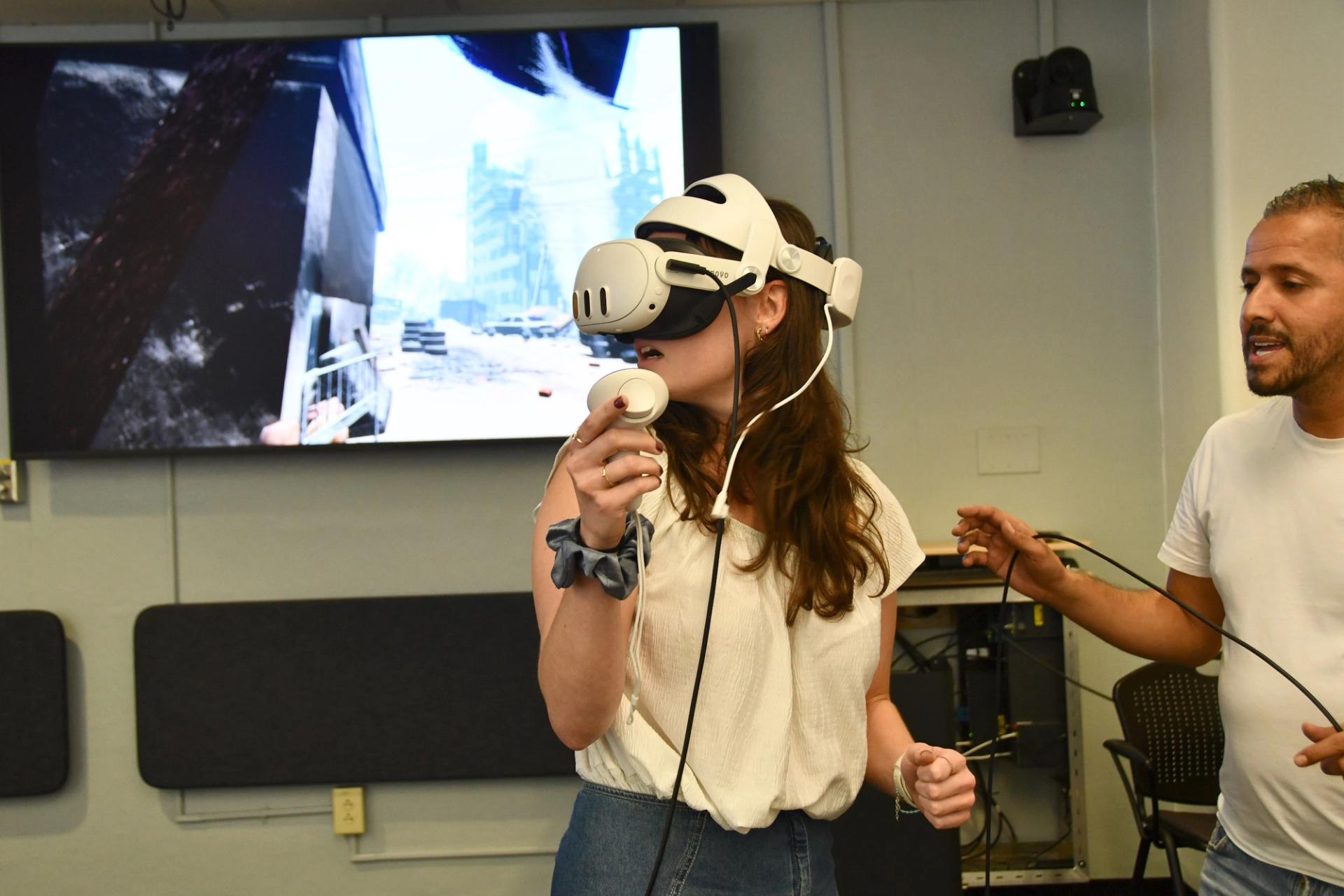
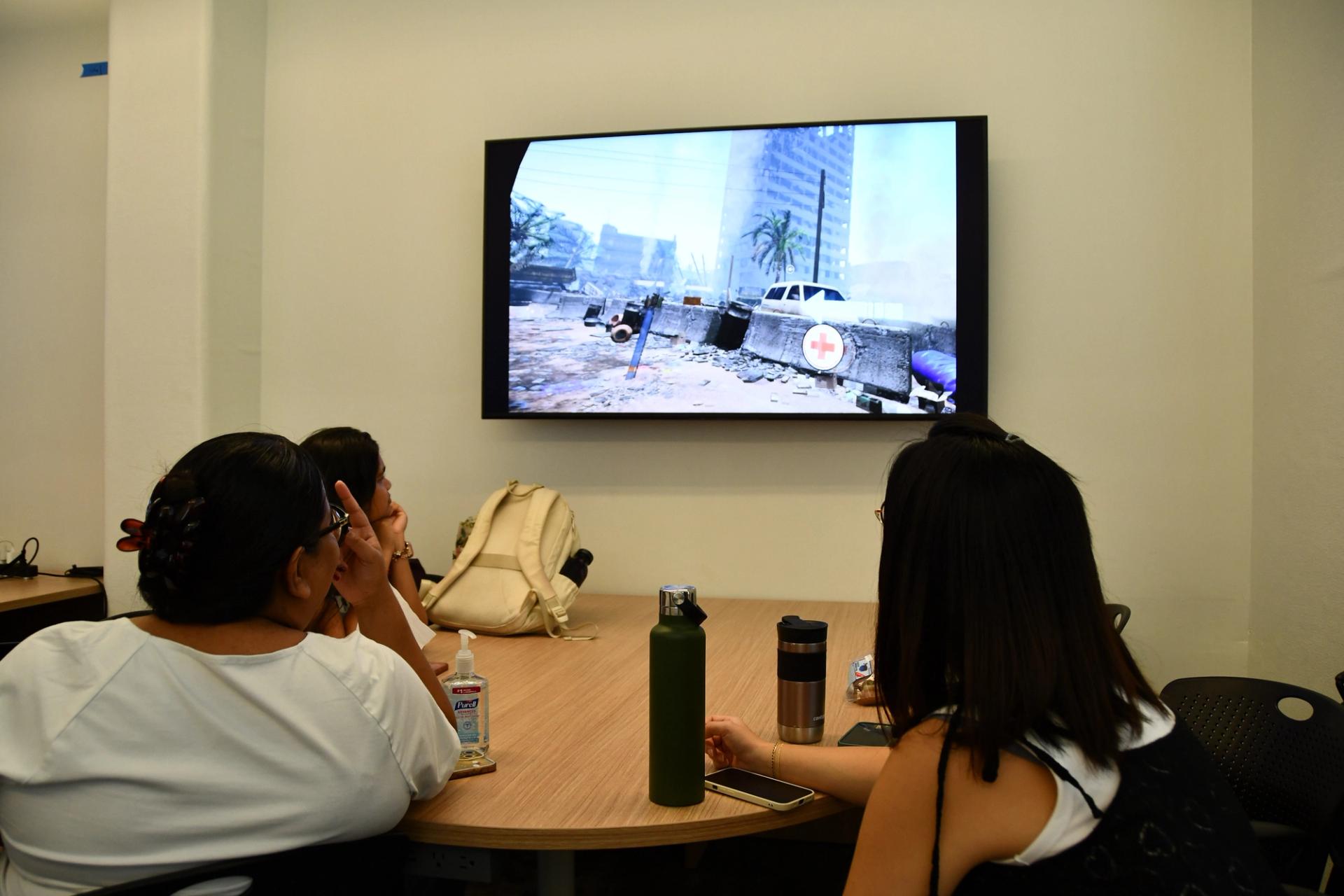
Issam asked for a volunteer, and Samantha “Sam” Schild, a global health master’s student, stepped forward and put on the headset. Instantly, her viewpoint of a bombed-out city street, military aircraft roaring overhead and a child collapsed at her feet filled the screens around the classroom. Under Issam’s calm guidance, Sam narrated the scene and received her mission: pick up the injured girl, find an ICRC medic in the rubble and signal for help with a white flag. The VR images were drawn from an official ICRC scenario called "The Escape," in which the trainee must carry an injured child through urban warfare to a doctor.
As Sam carefully followed these instructions in the virtual chaos, the other students watched every move on the monitors. When she finally removed the headset, the classroom fell silent.
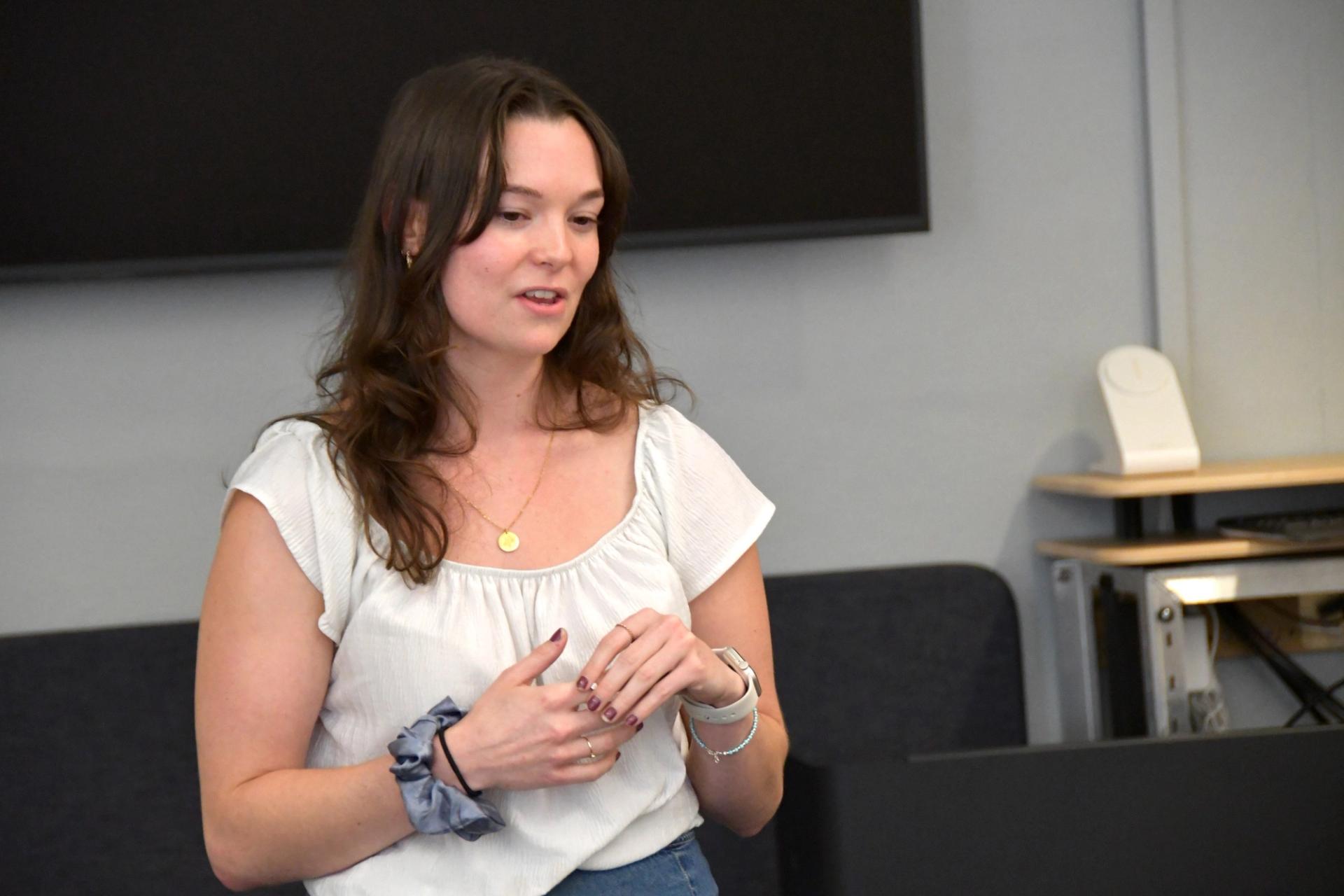
"It was a lot," she said. "The emotion... it's tricky because I feel like in today's world so much is documented. I mean, you can look on your smartphones and see things happen in real time, but even still knowing it was just a simulation... it was hard."
Currently, over 122 million people are forcibly displaced around the world. This number includes refugees, asylum seekers and internally displaced persons due to war, persecution and disaster. North Carolina is a key refugee resettlement state. Since 1980, the state has welcomed more than 30,000 refugees, primarily from Afghanistan, Syria, the Democratic Republic of Congo and Ukraine.
After Sam’s turn, classmates encountered their own VR scenario.
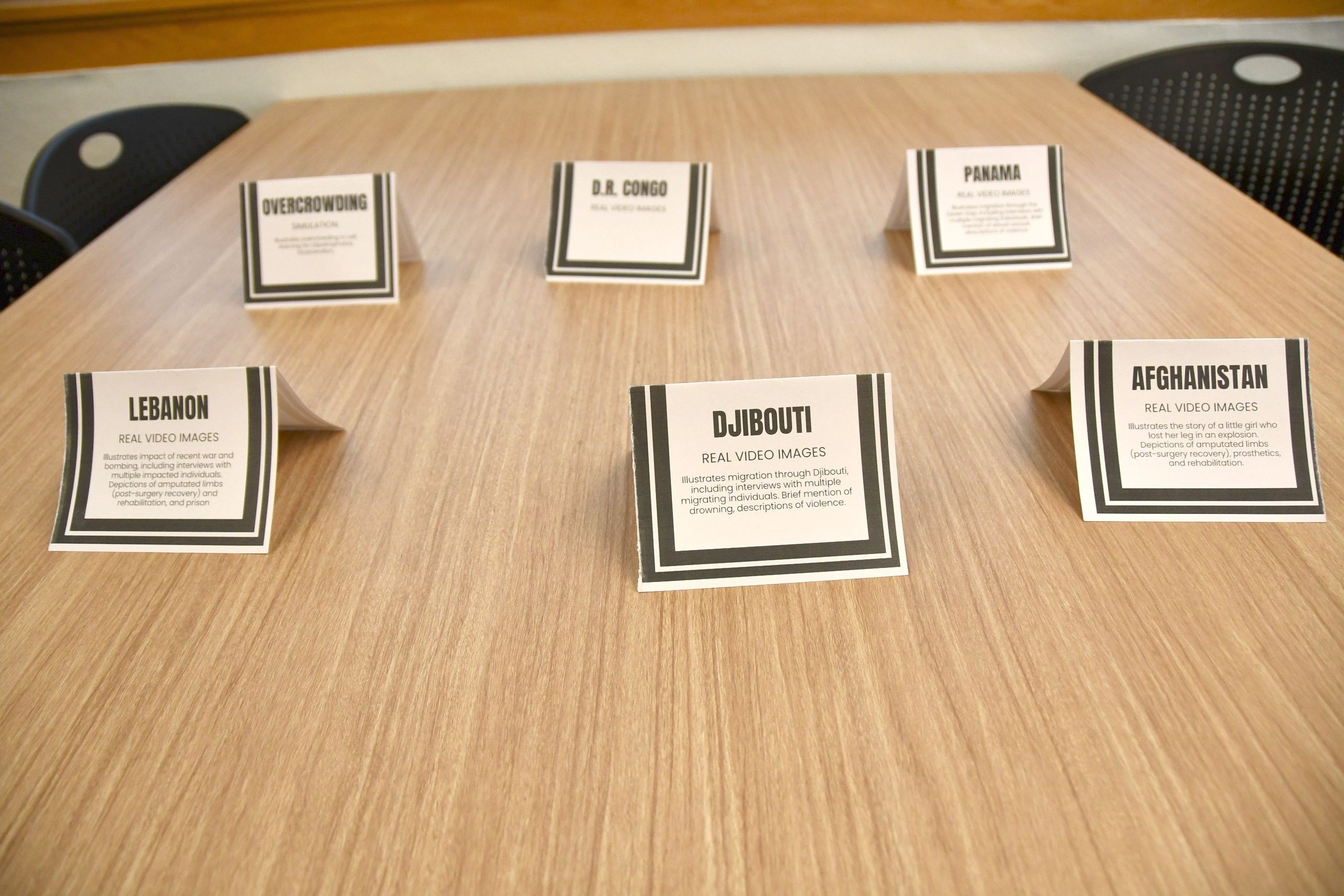
A small stack of laminated cards sat on a table at the back of the room, each labeled with a location: Lebanon, Djibouti, Afghanistan, Panama, DR Congo and a simulation called Overcrowding.
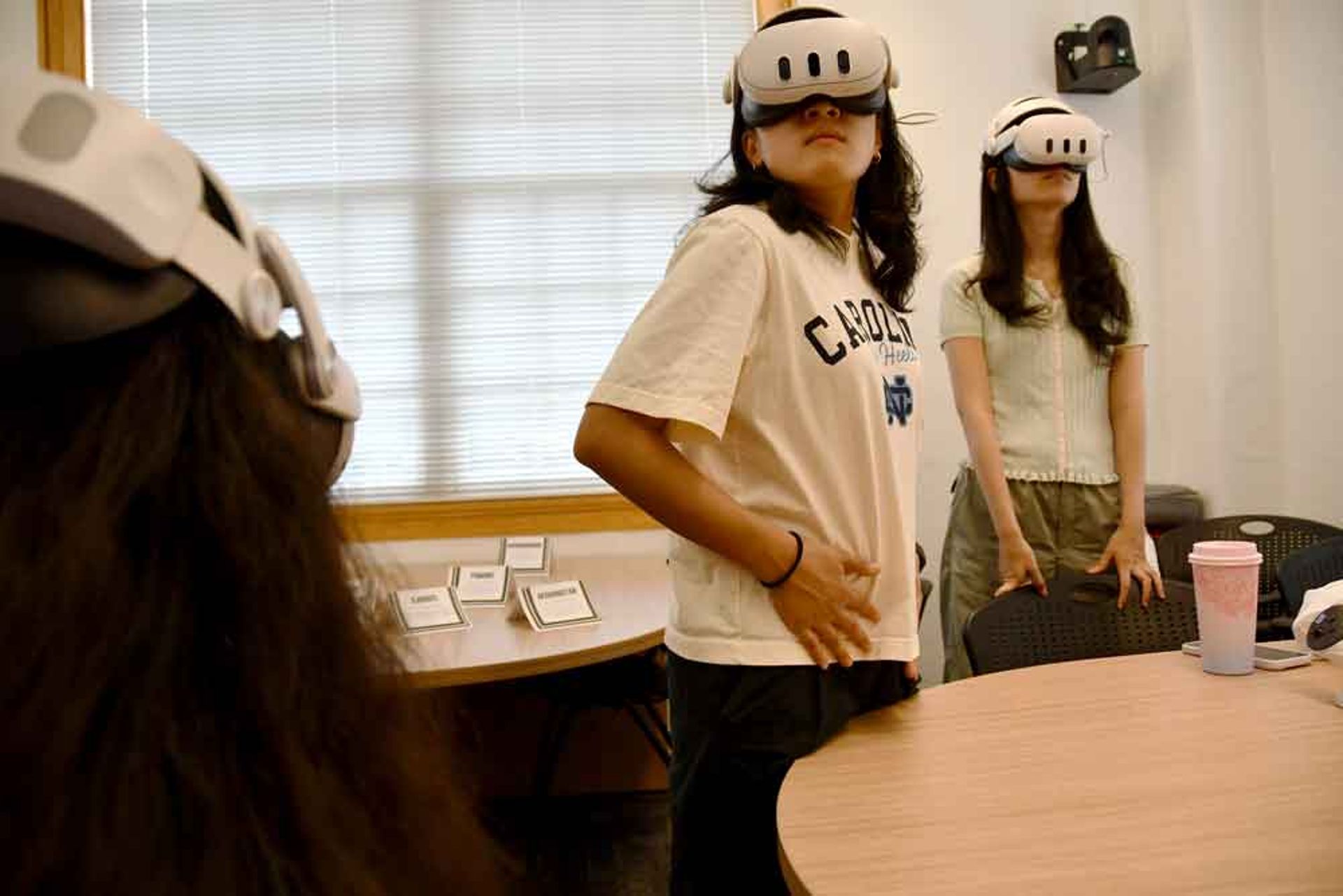
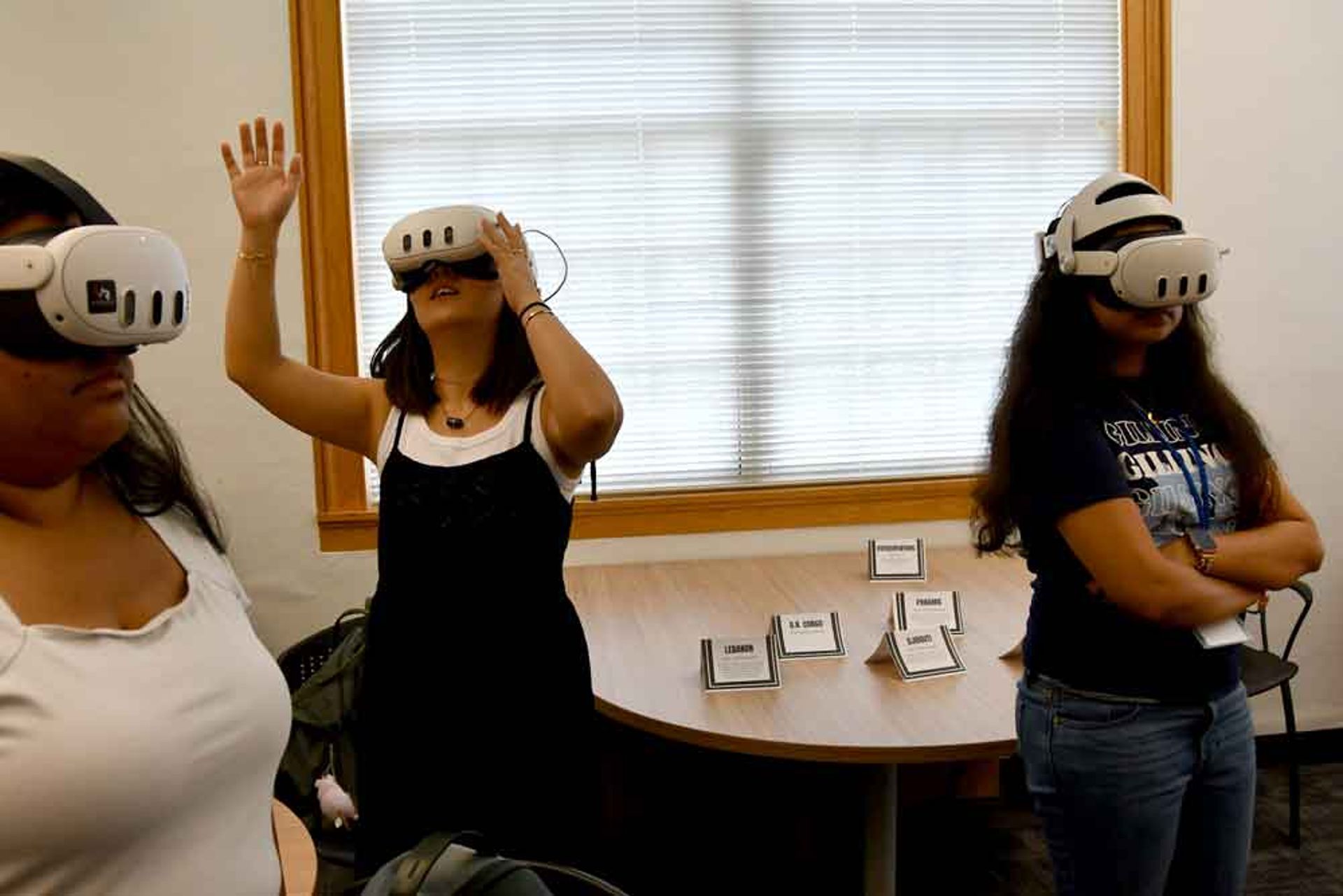
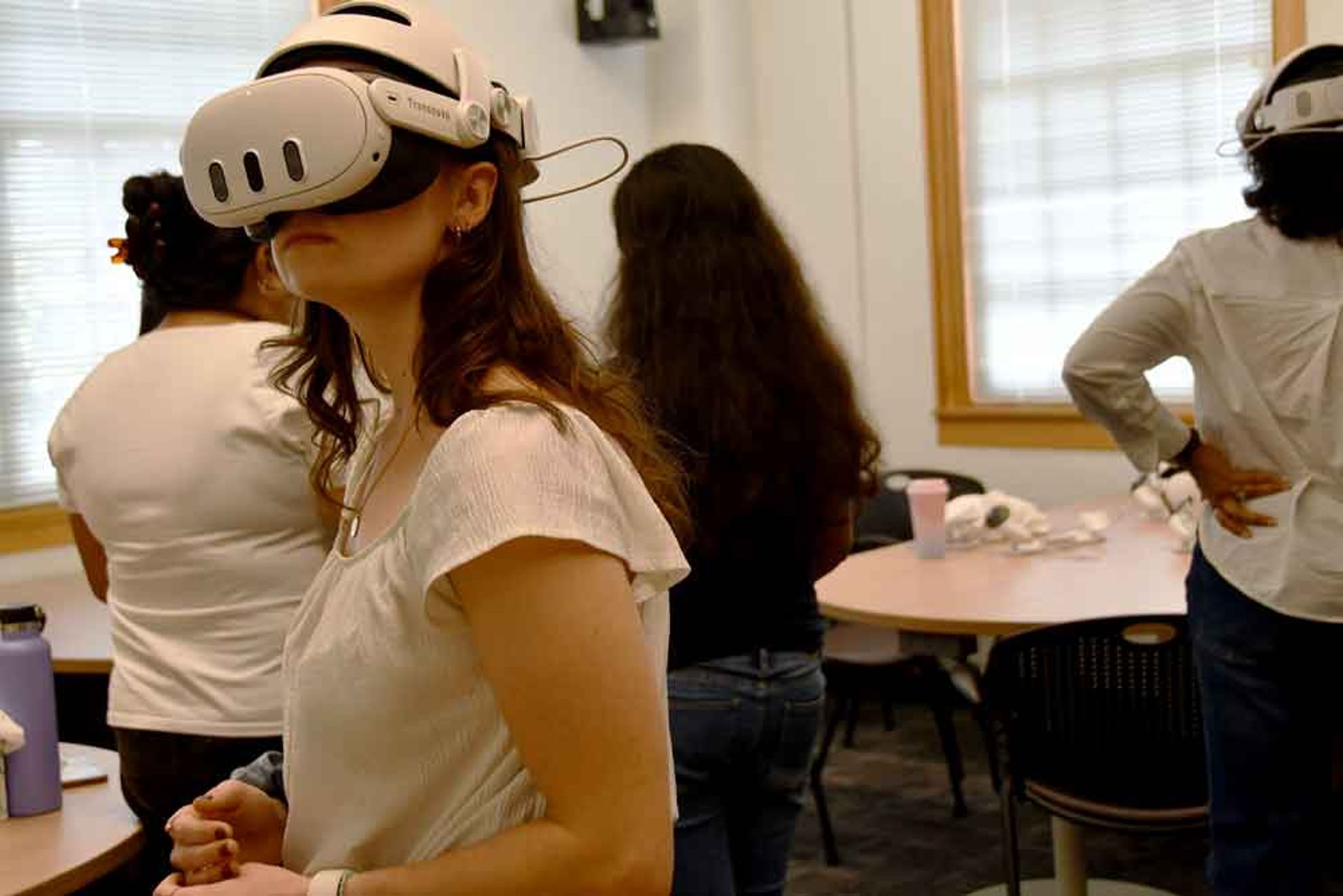
With these scenarios, each student confronted the "gray areas" of crisis response: incomplete information, conflicting priorities and impossible trade-offs. Some stood with arms outstretched, trying to comfort unseen victims; others sat quietly, scanning the virtual landscape for signs of danger. The experience brought textbook concepts to life. As one student later noted, Gillings students typically study these issues in theory, but, "what happened inside the VR headsets made the concepts visceral."
North Carolina is home to communities shaped by war and displacement, and many Gillings graduates will work alongside neighbors carrying those stories. That’s why pairing practical partnerships (ICRC, emergency medical services, campus collaborators) with emotional preparedness matters here. Public health is more than vaccines and water testing; it’s crisis literacy, ethical judgment and the habit of care.
———
When the headsets came off, the room buzzed with reflection.
Students described shock, empathy and surprise. The Afghanistan clip follows a young girl after an explosion, through amputation, prosthetic fitting and rehabilitation. The Djibouti simulation includes interviews with migrants in transit, some describing violence and drowning.
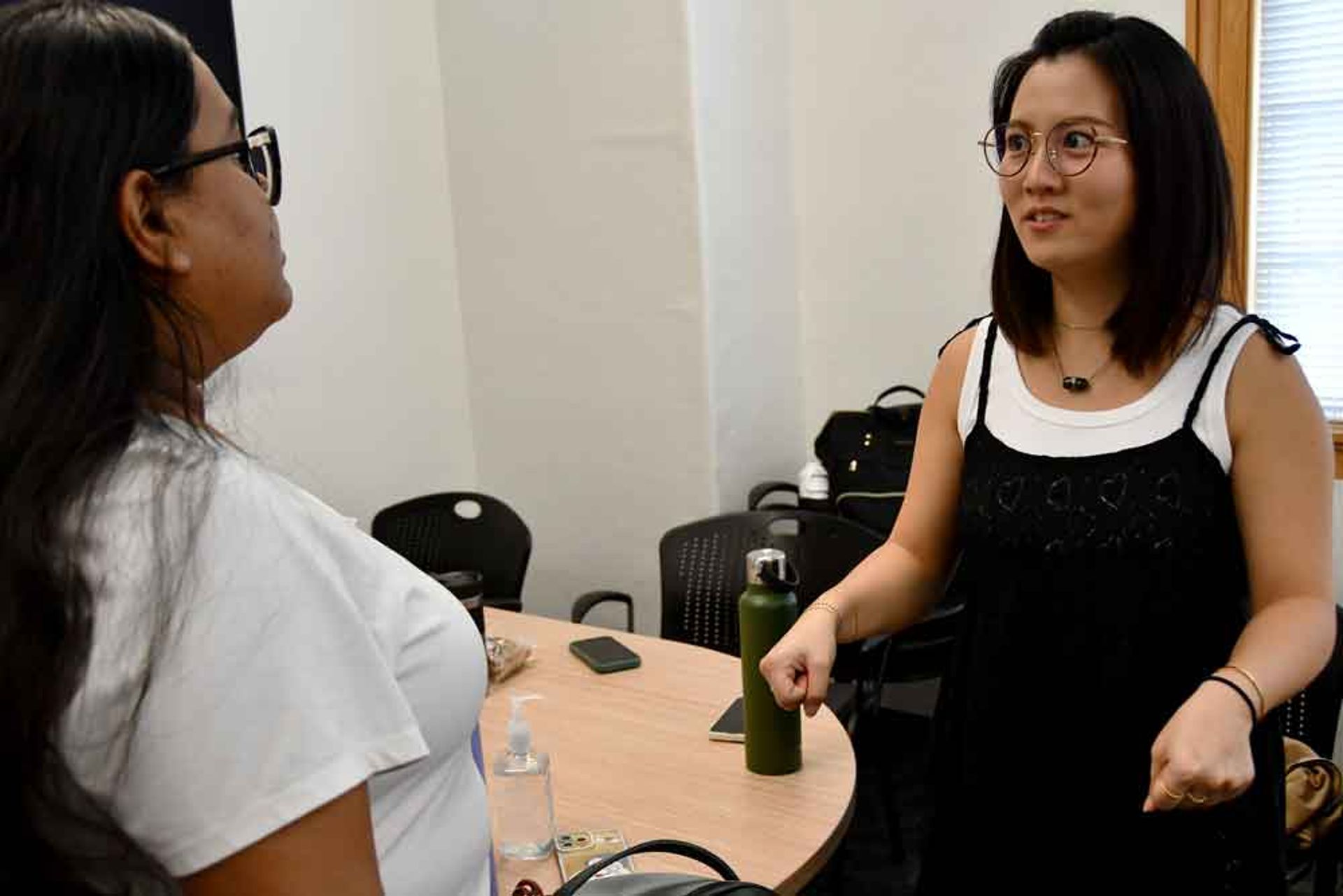
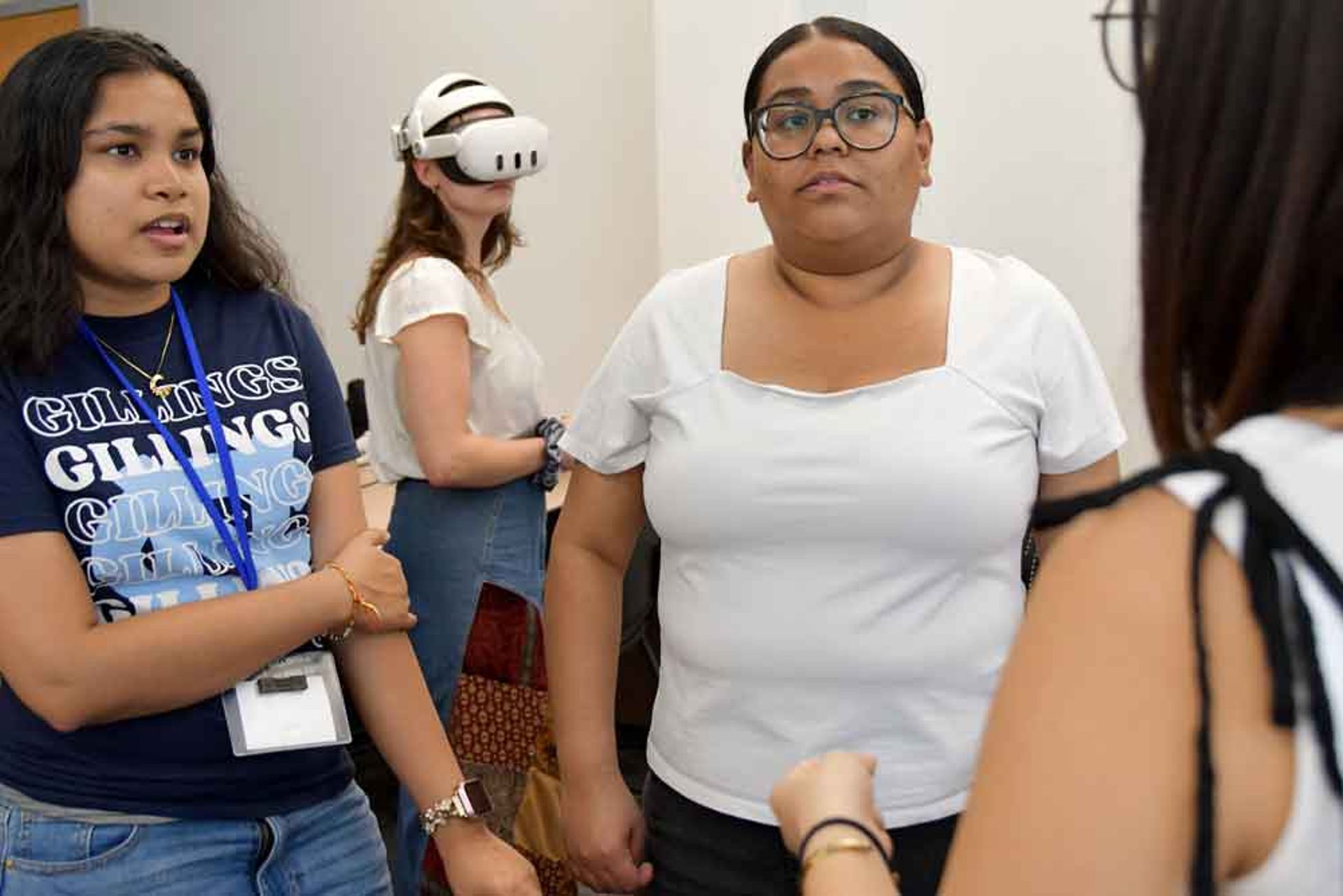
Samantha Schild reflected on the tension she felt in the simulation: "You see this person right in front of you," she said. "Basically, you have to ignore them and keep going with what the initial mission was. And that’s something that, reflecting on it, I think... how could I do that in a real-life situation?"
Another student who chose Afghanistan said the experience made refugee life feel tangible for the first time. “Before this,” she said, “I didn’t have a clear picture of what it’s like to be in a refugee camp… this opened my eyes.”
A few students chose multiple scenarios. “I did Pakistan first,” said Anoushka Das, a second-year, Master of Public Health student. “Then I saw Lebanon. I need a bit of a break now. But it’s incredible to see how we’re able to witness these conditions technically, even if we can’t fully feel them.”
By design, each student’s experience was different. So was their response. Issam noted that this variety, specifically how students react and what they carry, was part of the point.
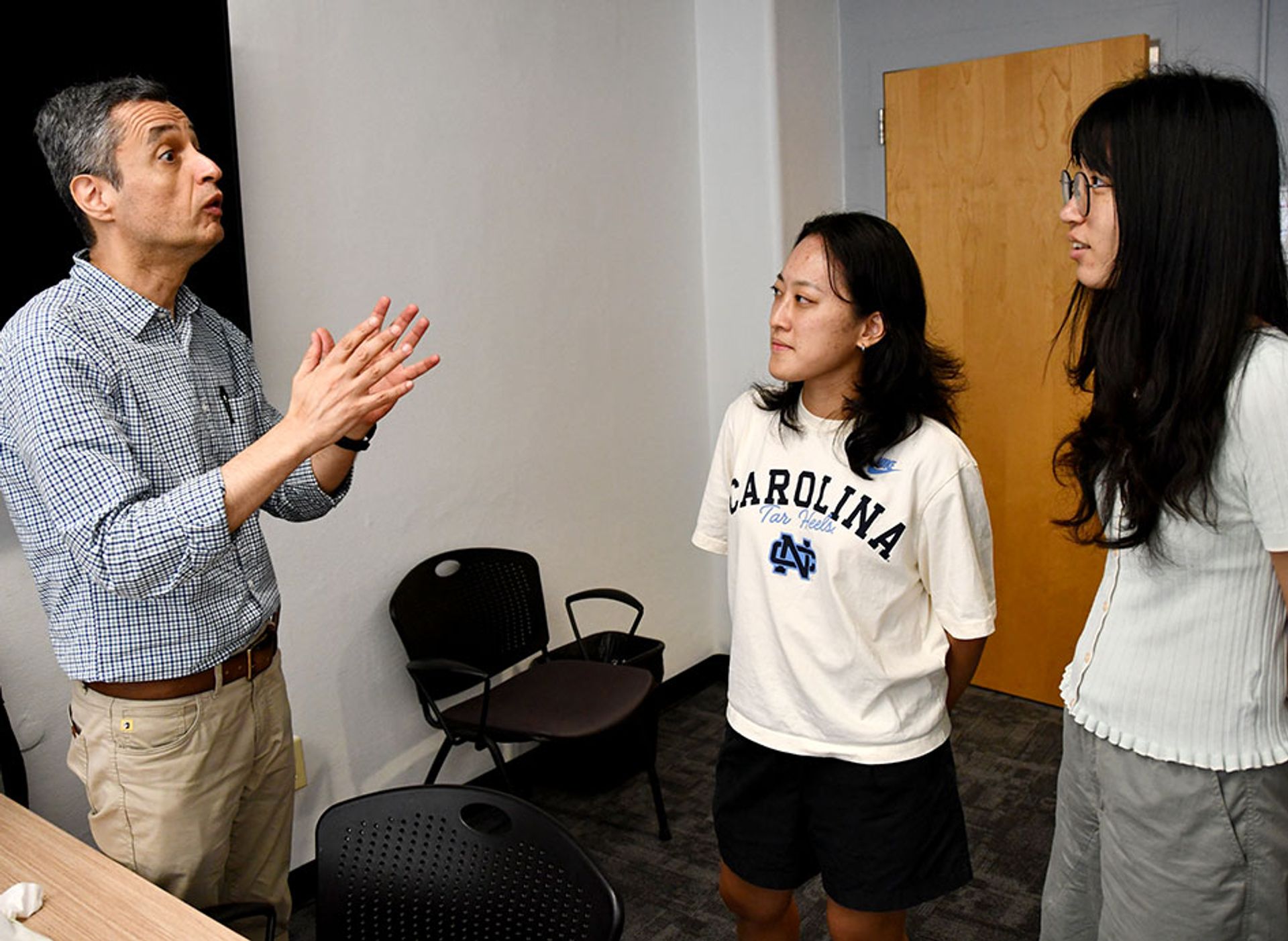
Dr. Jaff stood near the doorway as students filtered out. Two nursing students lingered to ask him how they might one day work with the Red Cross. He answered their questions with the same steadiness he brought to the room all morning. “The goal,” he said, “is to give students a glimpse of the complexity and let them carry that forward into whatever they do next.
———
Have an idea for another story that would work well as a photo essay? Contact us to give us a heads up at sphcomm@unc.edu.
