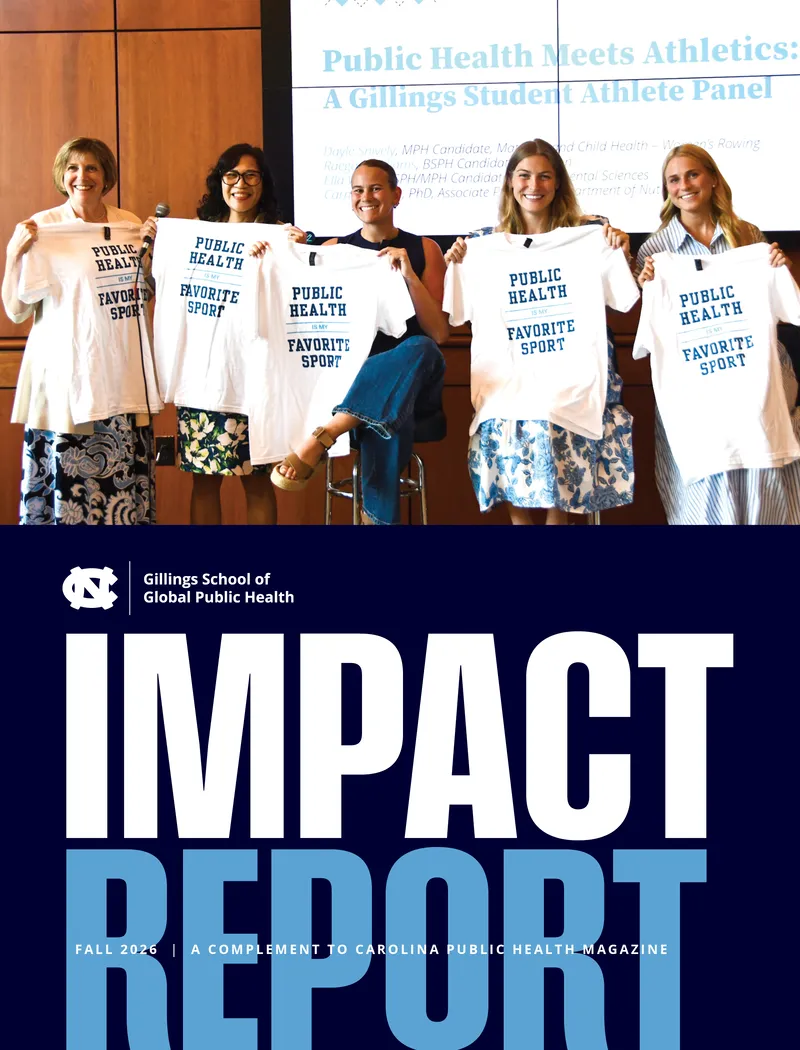
Students and faculty celebrate at the Gillings School Spring 2026 Commencement ceremony.
Undergraduate growth across all majors, strong master’s and doctoral programs, expanded career services and AI training shaped a year of academics at Gillings.
- 2,084 Students enrolled, fall 2026
- 231 New undergraduate students welcomed 2026
- 98% Graduates with a job or continuing education
- 867 Graduates per year
- 223 Permanent faculty
- 365 Permanent staff
This year, the Gillings School focused on expanding our academic partnerships with other UNC-Chapel Hill schools, as well as other UNC-system institutions, to ensure a more robust pipeline into all of our degree programs. We saw exciting undergraduate student growth across all majors, including in our newest major in Community and Global Public Health, as we welcomed a class of 231 new students. Additionally, all departments worked collaboratively to design new introductory public health courses and expand the availability of existing courses to students from all majors. These efforts align with the University’s goal of growing undergraduate education over the next five years.
Our master’s programs maintained strong residential enrollment, including our flagship MPH program. Experiential learning remained central. The School hosted another successful Practicum Day and MPH@UNC immersion for online students, giving them meaningful opportunities to connect with peers, faculty and staff.
We also continue to train the next generation of public health scientists, academics and researchers. Gillings doctoral students won two of the ten university-wide Impact Awards in 2026, in recognition of research that benefits the people and communities of North Carolina. A health behavior student was honored for the application of photo voice, a collaborative photography initiative in which Black women described how they navigated mental health during the COVID-19 pandemic, and a doctoral student in environmental sciences and engineering was recognized for their research on arsenic exposure through well water and its association with diabetes in N.C.
Recognizing artificial intelligence’s growing role in the field, we committed to preparing faculty to strengthen how AI is taught across the curriculum. We received grant funding to support training faculty in ethical use of the technology in both their teaching and practice with plans to thoughtfully integrate its use across our curricula over the next academic year so that our graduates are prepared for the workplace.
In response to feedback from last year’s student survey, the Gillings School expanded career services offerings and strengthened collaboration across student affairs, academic departments and alumni engagement teams to enhance the student experience. These investments delivered measurable results: in this year’s survey of more than 850 students, satisfaction with academic advising increased from 87% to 91%, while satisfaction with career services rose from 85% to 91%.
Gillings doctoral students won two of the ten university-wide Impact Awards in 2026, in recognition of research that benefits the people and communities of North Carolina.
Working closely with faculty, staff and departmental leaders, the Student Affairs unit introduced new advising committees, expanded student success programming and launched career development initiatives that reached students across the School. This year’s survey also highlighted students’ desire for greater engagement with alumni. In response, Student Affairs is partnering with alumni and academic departments to create more opportunities for networking, mentorship and career exploration, strengthening connections that support students during their time at the Gillings School and throughout their public health careers.
The School has also advanced several important faculty, staff and community initiatives. This year’s Staff Professional Development Day engaged approximately 80 staff members and received strong evaluations, establishing a foundation for future annual programming. The Community Strategic Plan moved from approval to implementation through faculty, student and staff working groups that identified priorities around mentoring, psychological safety and Climate Study implementation. The Faculty and Staff Affairs unit strengthened schoolwide well-being efforts by expanding partnerships, supporting the Well-being Collaborative and Think Tank, developing dialogue facilitators, promoting psychological safety and creating structures to embed well-being more fully into the culture and operations of the School.
Student profile
- NC residents: 57.6%
- Students from non-white communities: 45.1%
- International students: 11.9%
- Distance learners: 23%
- Domestic students from underrepresented non-white communities: 24.3%
- Domestic MPH@UNC students from underrepresented non-white communities: 42.8%
MPH Practicum
- 265+ practicum partner organizations
- 730+ practicum products produced
- 59% of practica primarily benefited populations in North Carolina
- 90% of practica addressed historical and systemic factors contributing to poor health outcomes in communities.
- 83% of practica worked to reduce disproportionate health burdens among economically or socially marginalized communities.
- 88% of practica provided resources to economically/socially marginalized communities
Graduate employment areas (2026)
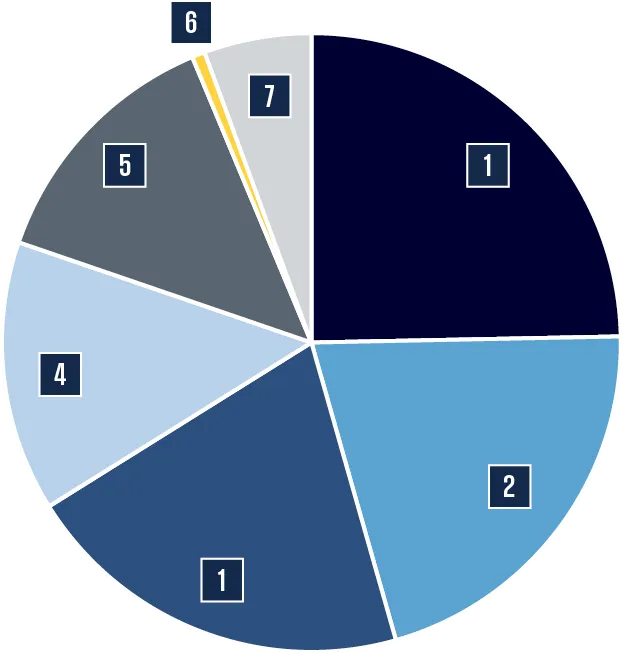
- 1. For-Profit Organization 255 (24.7%)
- 2. Health Care Organization 216 (20.9%)
- 3. Academic Institution 212 (20.5%)
- 4. Non-Profit Organization 146 (14.1%)
- 5. Government Agency 139 (13.5%)
- 6. Self-Employed 7 (0.7%)
- 7. Not reported 58 (5.6%)
Students by department
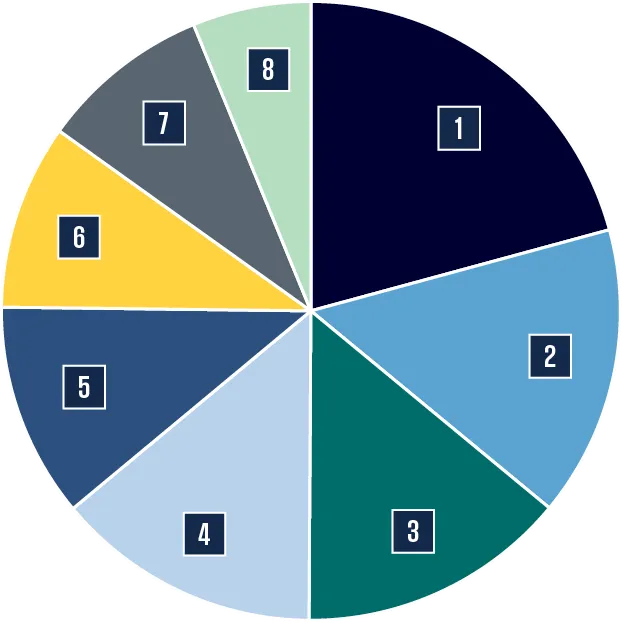
- 1. HPM 433 (20.8%)
- 2. NUTR 317 (15.2%)
- 3. EPI 294 (14.1%)
- 4. BIOS 289 (13.9%)
- 5. PHLP 234 (11.2%)
- 6. HB 202 (9.7%)
- 7. ESE 186 (8.9%)
- 8. MCH 129 (6.2%)