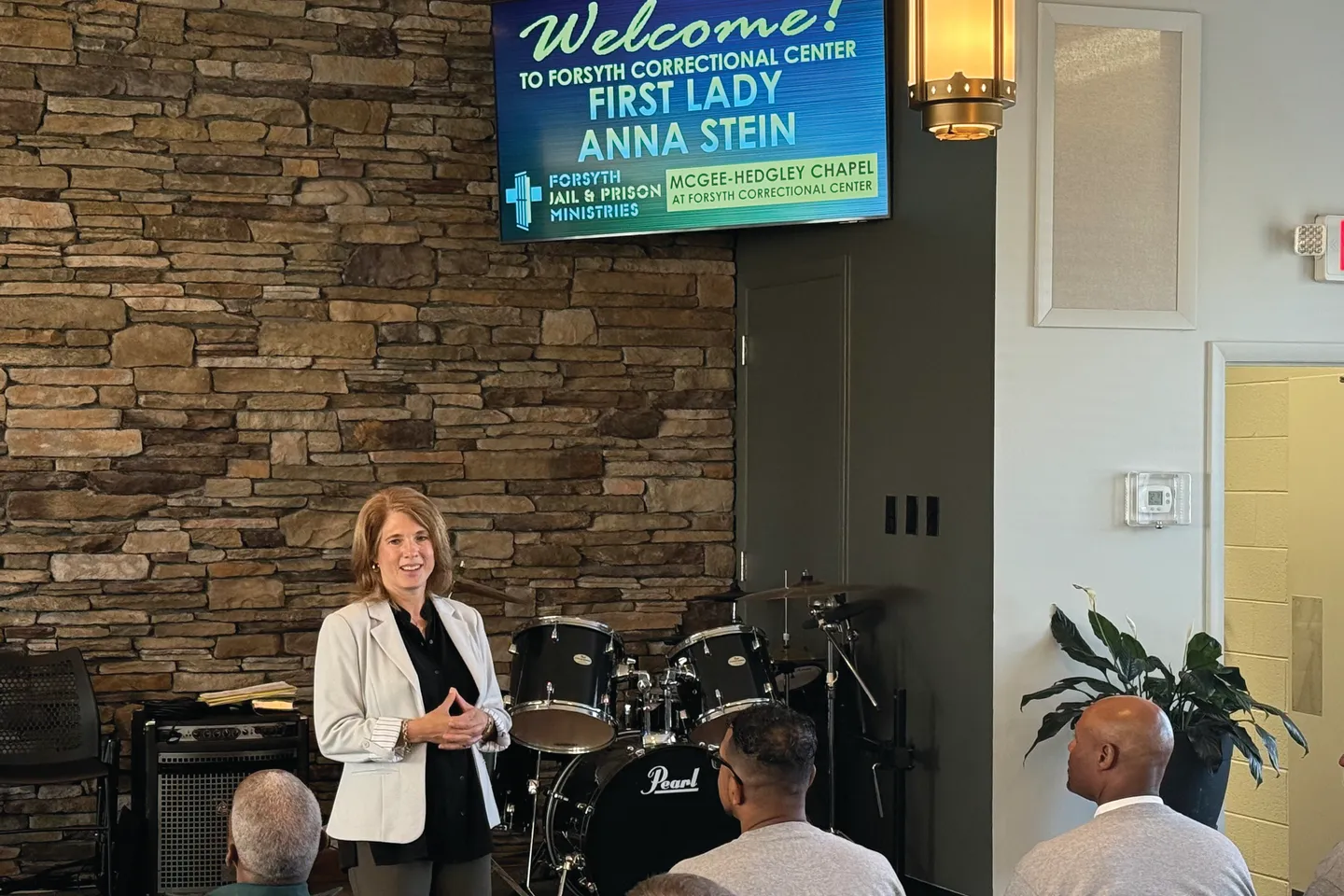

Photo credit Office of the First Lady: Anna Stein speaks with people incarcerated at Forsyth Correctional Center.
First Lady Anna Stein, MPH ’12, on what ‘take care’ means in public health, how Gillings shaped her instincts and the resilience she sees across the state.
North Carolina First Lady Anna Stein, BA ’92, JD ’95, MPH ’12 (health behavior and education), brings to her role a perspective shaped by public service and her grounding in public health. A proud alumna of the UNC Gillings School of Global Public Health, she carries forward the values she learned here — care, connection and a commitment to community well‑being. As she travels the state, Stein focuses on the many ways North Carolinians look after one another.
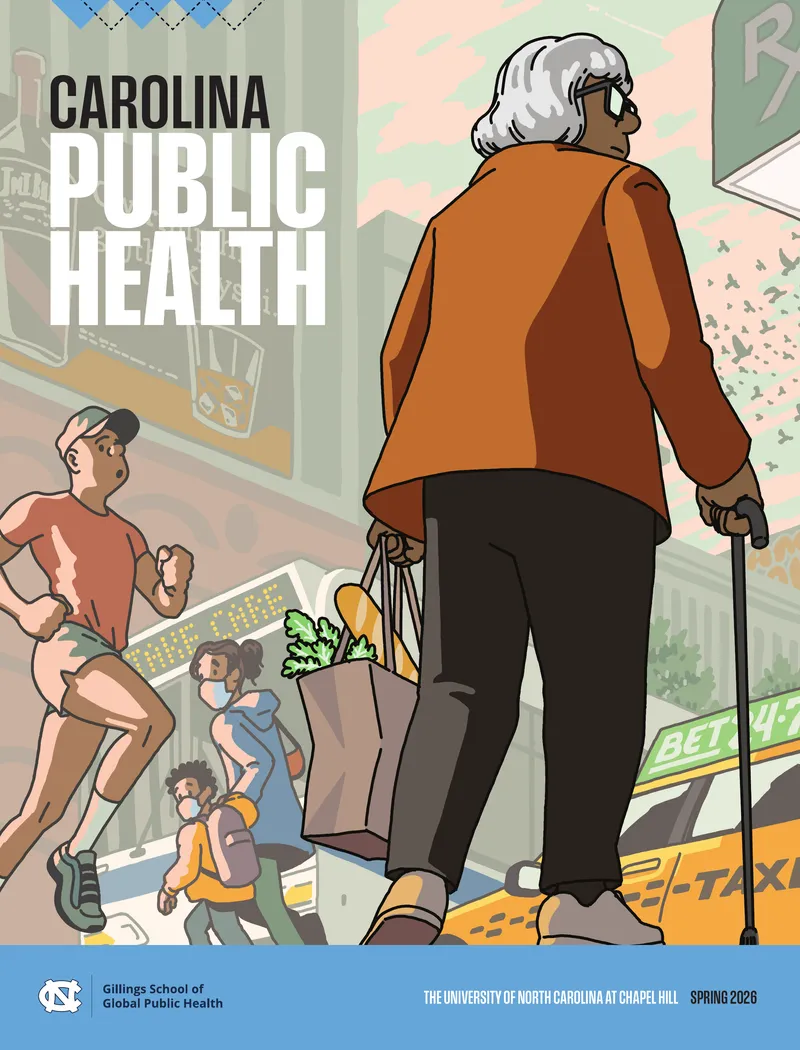
Our theme this spring is “take care.” From Gillings to your role now, what practices or values have remained touchstones for well‑being and safety?
My core value is a belief in the humanity of all people. That has guided my priorities as First Lady, especially destigmatizing people with mental health or substance use disorders and people who are incarcerated or returning home. We are interconnected. We rise together or fall together, and public health is fundamentally about helping us rise together.
The Gillings School emphasizes research, education and practice to improve health across all 100 counties. How do you keep the needs of the entire state in mind?
Working in the Division of Public Health was perfect preparation for this role because we partnered closely with local health departments. My mind naturally works at the county level. I still approach the state that way, listening locally, understanding context and using data alongside what I hear from people on the ground. That training from Gillings has stayed with me.
We are interconnected. We rise together or fall together, and public health is fundamentally about helping us rise together.
You’ve seen public health as a student, a professional and now as First Lady. How have those experiences shaped your understanding of North Carolinians’ health and resilience?
My work taught me how essential policy is to creating good health. Early in my career, I worked on tobacco prevention just after smoke‑free restaurants and bars became law. The impact on people’s health was immediate. More recently, Medicaid expansion has been transformative for so many North Carolinians. Policy really does shape resilience. I’ve also seen resilience up close. After Hurricane Helene, I spent time in western North Carolina and witnessed how neighbors showed up for one another. The strength and generosity of people in this state is remarkable.
Many of our students look to alumni for guidance. What advice would you offer about caring for themselves while preparing for careers centered on caring for others?
Take the pressure off yourself to have everything figured out! Careers unfold over decades, and most of us take detours along the way. I’m still pivoting to make an impact, and I hope to keep doing that for years to come. I want students to enjoy the present and trust that they have plenty of time to make the difference they’re hoping to make.
You meet people across the state who work hard to keep their families and communities healthy. How does your public health background shape the way you listen to and uplift their stories?
Public health taught me to seek out the voices of people with lived experience, not only those with inspirational stories but those who are currently struggling. When I visit a prison, I sit down with people who are incarcerated and listen to their experiences. That approach comes directly from my public health training.